
Quick answer
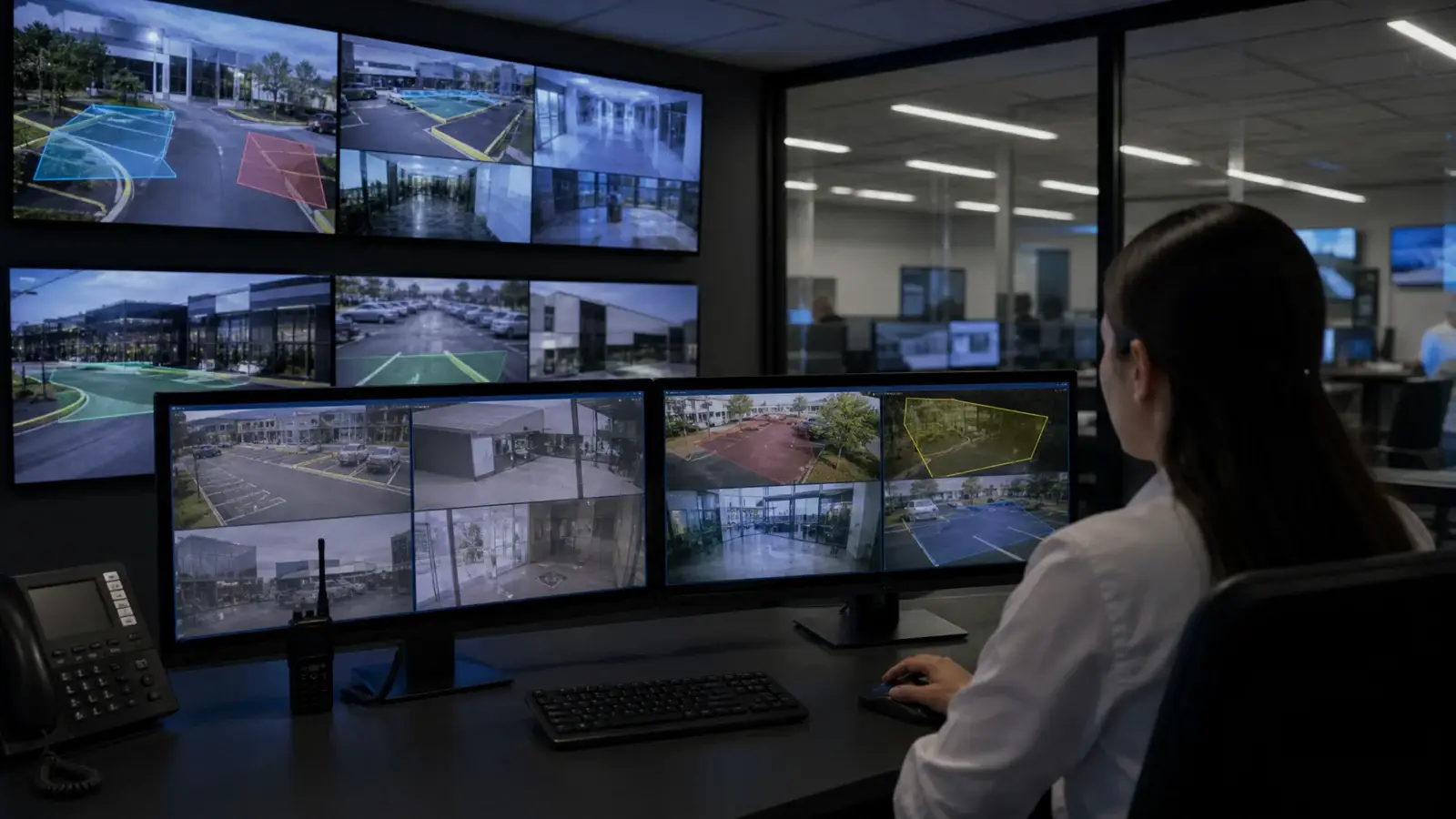
Video analytics uses software to evaluate camera imagery for configured activity or conditions. It can help security teams focus attention on relevant events, but its usefulness depends on camera placement, image quality, lighting, environmental conditions and proper configuration.
What is video analytics?
Video analytics adds software-based analysis to a video surveillance system. Instead of relying only on a person to watch every camera continuously, analytics can evaluate configured camera scenes and help surface activity that matches defined rules.
The exact capability depends on the platform and configuration, but the underlying idea is straightforward: use software to make recorded or live video easier to work with.
Learn more about ACG’s commercial video analytics solutions.
Video analytics begins with the camera image
Analytics cannot overcome every weakness in the underlying camera scene.
If a camera is poorly positioned, heavily obstructed, too far from the relevant activity or operating in unsuitable lighting, the analytics also have a weaker image to analyze.
That is why analytics should be designed alongside the video surveillance system, not added afterward as if camera placement no longer matters.
What can video analytics support?
Depending on the system, analytics may help support tasks such as:
- drawing attention to configured activity
- monitoring defined areas
- reducing the amount of video a user must manually review
- supporting event investigation
- improving operational awareness around selected camera scenes
Specific functions vary by product and configuration, and a capability should be confirmed against the selected technology and the site requirements before it is relied upon.
What affects analytics performance?
Camera position
The viewing angle and distance affect what information is available to the software.
Image quality
Analytics require usable imagery. Blur, poor focus or excessive distance can reduce useful detail.
Lighting
Changing exterior light, shadows, headlights and low-light conditions can affect a camera scene.
Environment
Weather, vegetation, vehicle movement and other background activity can increase scene complexity.
Configuration
The system must be configured for the actual objective. A rule that does not reflect the operating environment can generate unhelpful results.
Where commercial organizations use analytics
Construction sites
Analytics may help focus attention on defined areas of an active commercial jobsite when placement and site conditions support the intended use.
See construction site security systems.
Warehouse and logistics properties
Commercial yards, loading areas and vehicle approaches can generate large amounts of video. Analytics may support selected operational or security objectives around these areas.
See warehouse and logistics security systems.
Parking areas
Configured analytics can support awareness around defined portions of large commercial parking environments.
Commercial perimeters
Exterior camera scenes may be configured around areas where the organization needs better awareness of specific activity.
Can mobile security towers use video analytics?
Depending on the cameras, connectivity and system configuration, mobile security towers may incorporate video analytics.
The same design principles still apply: useful camera placement and configuration matter regardless of whether the camera is mounted permanently or on a mobile platform.
What video analytics does not do
Analytics should not be described as perfect detection, guaranteed prevention or a replacement for people and operating procedures.
It does not eliminate the need for:
- appropriate cameras
- correct placement
- system configuration
- network and recording design
- human review when required
- a plan for responding to relevant events
How analytics fits the larger security system
Video analytics is most useful when the organization has already defined what it needs to observe and what should happen when relevant activity occurs.
The broader system may also include access control, thermal imaging, mobile surveillance, fixed cameras or other commercial security technologies.
Frequently asked questions
What is video analytics in commercial security?
Video analytics uses software to evaluate surveillance-camera imagery for configured activity or conditions and help users focus on relevant video.
Does video analytics replace security personnel?
No. Analytics can help organize or surface video information, but human review and response procedures may still be required.
Does camera placement affect analytics?
Yes. Camera angle, distance, lighting, image quality and environmental conditions can materially affect the usefulness of analytics.
Can video analytics work outdoors?
It can be used in exterior environments, but weather, lighting, vegetation, traffic and scene complexity should be considered during design and configuration.
Can mobile security towers use analytics?
Depending on the equipment and platform, a mobile security tower may support video analytics as part of its surveillance configuration.
Final takeaway
Video analytics is most valuable when it begins with a clear security objective, useful camera imagery and realistic expectations. The software should strengthen a well-designed surveillance system rather than substitute for one.
Contact ACG Security Solutions to discuss video surveillance and analytics requirements for a commercial property.
No comment yet, add your voice below!