COMMERCIAL SECURITY INFRASTRUCTURE
Commercial Structured Cabling
Structured cabling is the physical communications infrastructure that allows cameras, access-control devices, servers, network equipment and other connected systems to communicate reliably across a commercial property. ACG Security Solutions plans and installs structured cabling around the systems the facility actually needs to support, rather than treating cabling as a generic bundle of wire.
For security projects, the cabling plan influences camera placement, access-control architecture, network-room organization, expansion options and the practical serviceability of the system. ACG can coordinate copper, fiber, pathways, racks and related infrastructure with video surveillance, access control and other connected security requirements.
What is commercial structured cabling?
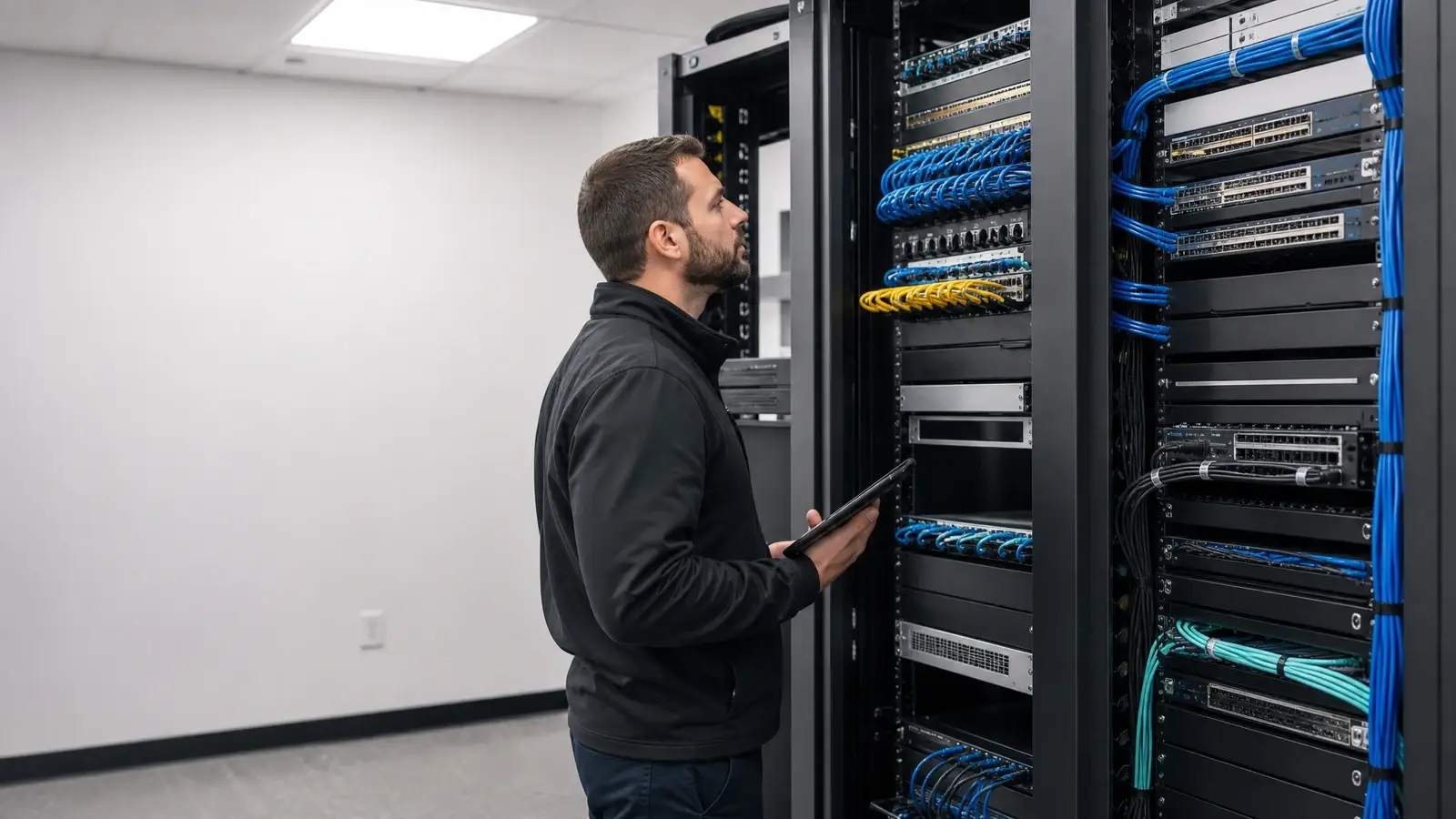
Commercial structured cabling is an organized system of cable, termination hardware, pathways, equipment spaces and documentation used to support data and connected building technologies. Instead of running each new device as an isolated point-to-point installation with no broader plan, a structured approach creates defined pathways and connection points that can be documented, tested and maintained.
The exact architecture varies by facility. A single-floor office may have different requirements from a distribution center, multi-building campus or industrial property. Security devices may also have different network, power and distance considerations than ordinary workstation connections. ACG evaluates the endpoints, pathways, telecommunications spaces and existing infrastructure before defining the cabling approach.
Structured cabling does not make a system “future-proof.” Technology changes, equipment is replaced and facilities expand. The practical goal is to create an organized infrastructure that supports the approved systems today and makes reasonable expansion easier to plan later.
Infrastructure that supports connected commercial systems
Copper data cabling
Copper cabling is commonly used for network-connected devices within appropriate pathway and distance conditions. In commercial security environments, it may support IP cameras, access-control components, workstations, network appliances or other connected endpoints.
Fiber backbones
Fiber can provide a useful backbone between telecommunications rooms, buildings, large facility zones or other locations where the project requires optical connectivity. It is often considered where distance, electrical isolation, bandwidth planning or campus architecture makes a fiber link more appropriate than a copper-only approach. ACG evaluates the connected equipment and pathway before recommending the backbone design.
Power-over-Ethernet pathways
Many modern security devices can receive both network connectivity and power over supported Ethernet infrastructure. That can simplify certain camera and access-control deployments, but PoE capability depends on the network equipment, endpoint requirements, cable path and total power design. ACG plans these connections around the actual devices and switching environment rather than assuming every endpoint can share the same power approach.
Telecommunications rooms and racks
Cabling is easier to manage when equipment spaces are organized. Telecommunications rooms, network racks, patching and cable-management hardware should provide a clear relationship between field devices and the network equipment serving them. ACG can coordinate rack layout, patching and security-system connections so future service work does not begin with tracing an undocumented bundle of cables.
Cable pathways, labeling and documentation
The pathway matters as much as the cable. Ceiling spaces, conduit, tray, risers, sleeves and other routes can affect installation, protection and serviceability. Clear labeling and documentation help identify where a cable starts, where it terminates and what device or zone it supports. That information becomes especially important when a facility adds cameras, relocates equipment or troubleshoots a connection later.
Expansion and multi-area infrastructure
Large facilities often need more than one equipment location. A warehouse, campus or industrial property may require multiple closets, backbone connections or building-to-building links. ACG can plan the relationship between those areas so security endpoints connect through a documented architecture instead of accumulating as separate one-off installations over time.
Structured cabling for video surveillance
IP video surveillance depends on the physical network beneath the cameras. Camera placement determines where connectivity is needed, while resolution, recording architecture, switching, power and network ownership influence how the cabling should be planned. A cable route that is convenient but poorly aligned with the final camera design can create unnecessary rework.
ACG can coordinate commercial video surveillance and cabling as part of one system plan. That includes identifying camera endpoints, reviewing existing pathways, determining where network equipment is located, and defining how each camera will connect back to the appropriate infrastructure. Where the project includes exterior cameras, warehouses or large properties, environmental and pathway conditions also need to be reviewed.
The cabling plan should support serviceability. Proper labeling, patching and documentation allow a technician to trace a camera connection without guessing which unlabeled cable belongs to which device. That discipline becomes more valuable as the camera count and number of network closets increase.
Structured cabling for access control and secured doors
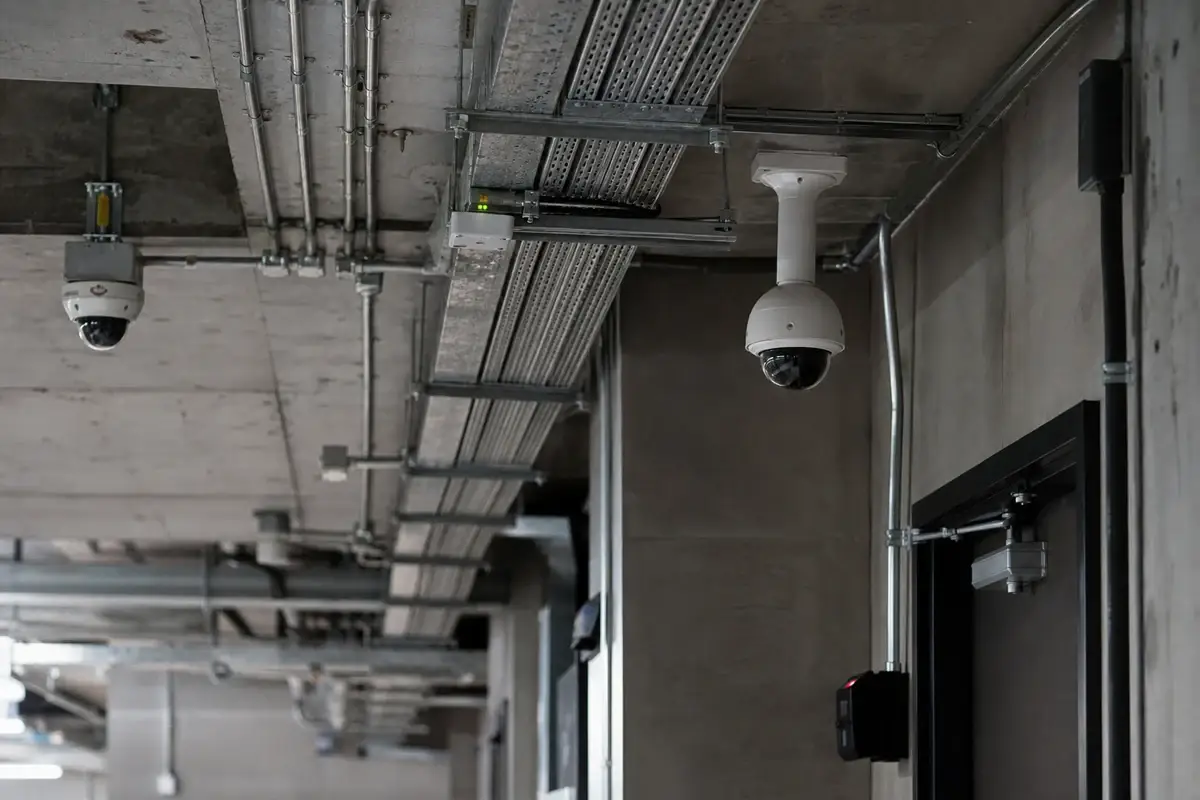
Access control adds another set of physical connections around doors, controllers, readers, request-to-exit devices and other compatible components. Some connections may be network-based, while others are specific to the access-control architecture. The cabling design must therefore follow the selected system rather than copying the camera network layout.
Door locations also introduce practical routing issues. Pathways may need to reach frames, ceilings, secure equipment spaces or controller locations without interfering with normal door operation. ACG can coordinate the security-system design with the available pathways and the building conditions identified during the site review.
Cabling beneath analytics, servers and security platforms
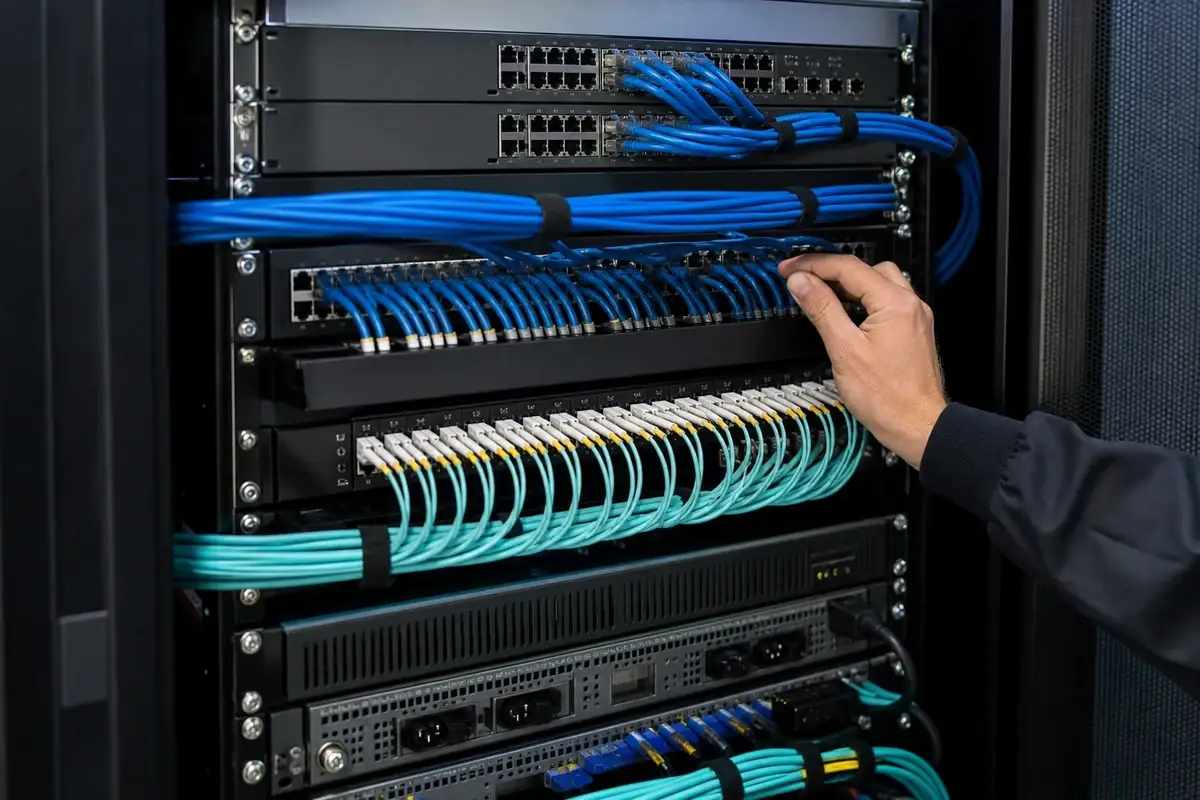
Connected security systems increasingly rely on software, storage and network infrastructure. Video analytics needs usable camera streams. Video management systems need access to cameras and recording resources. Access-control software depends on controllers, servers or cloud-connected components according to the selected architecture. The cabling layer does not perform those functions, but it enables the devices to communicate.
For projects involving local servers, network video recorders, storage or Dell PowerEdge server infrastructure, ACG can coordinate the physical connectivity between security endpoints and the equipment environment. The exact switching, storage and server architecture should be defined separately from the cable itself.
What ACG needs before specifying cabling
A useful cabling plan starts with the systems and spaces the infrastructure must serve.
- Endpoint inventory. What cameras, doors, network devices, servers or other connected systems are included in the project?
- Facility and pathway conditions. What ceilings, trays, conduit, risers, exterior routes or building-to-building pathways are available?
- Existing infrastructure. Which cables, racks, closets, patch panels or fiber links already exist, and what condition are they in?
- Power and network requirements. Which endpoints require PoE or other supported power arrangements, and who owns the network equipment?
- Equipment-room conditions. Where are switches, controllers, servers and patching located, and is there sufficient organized space for the proposed work?
- Expansion and coordination needs. Are additional buildings, cameras, doors or technology projects expected to affect the design?
These inputs help define an infrastructure plan that supports the approved security systems without making assumptions about the building or network.
How ACG scopes a structured cabling project
1. Define the connected systems
ACG begins by identifying the devices and platforms the cabling must support. Cameras, access-controlled doors, servers, network equipment and other endpoints are documented so the physical infrastructure follows the system design instead of being installed in isolation.
2. Inspect pathways and equipment spaces
The project team reviews available pathways, telecommunications rooms, racks, existing cable and the practical routes between endpoints and network equipment. Conditions that may require additional coordination are identified before the installation plan is finalized.
3. Select the cabling architecture
Copper, fiber, backbone links, equipment locations and patching are planned according to the facility, connected equipment and project requirements. The design also considers documentation, organization and reasonable expansion needs.
4. Install, terminate and document
Approved cabling is routed, terminated and labeled according to the project plan. Patch points and equipment connections are organized so technicians can identify the relationship between field devices and the infrastructure serving them.
5. Test and prepare for system commissioning
The installed cabling is tested using the applicable project procedure before the connected security systems are commissioned. Any failed or inconsistent link should be addressed before a camera, controller or other endpoint is blamed for a physical-layer problem.
Copper vs. fiber infrastructure
The selection is not based on a simple “fiber is better” rule. Many commercial systems use both, with copper serving local endpoints and fiber connecting larger facility zones or equipment rooms.
| Factor | Copper cabling | Fiber cabling |
|---|---|---|
| Typical role | Device and local network connections within supported design conditions | Backbone, building-to-building or other optical network links |
| Electrical characteristics | Carries electrical signals and may support compatible PoE endpoints | Uses optical transmission and does not provide PoE to the remote endpoint |
| Pathway considerations | Route, device power, environment and supported link design must be reviewed | Fiber type, termination, optics, protection and pathway must be coordinated |
| Supporting equipment | Patch panels, switches, compatible connectors and endpoint hardware | Fiber panels, optics or transceivers and compatible network equipment |
| Best fit | Many local IP security and network endpoint connections | Backbone or distance-sensitive links where the architecture supports fiber |
New construction, retrofit and phased upgrades
New construction offers an opportunity to coordinate pathways before ceilings and walls are closed, but that does not eliminate the need for a detailed endpoint plan. Camera views, door hardware, network-room locations and equipment responsibilities still need to be defined early enough for the cabling to support the final security design.
Retrofit projects require a different approach. Existing pathways may be crowded, undocumented or no longer aligned with the current facility layout. Some installed cable may still be useful; other routes may need to be replaced or reorganized. ACG can review the existing infrastructure before determining how much should remain.
Why organizations work with ACG on structured cabling
ACG Security Solutions understands structured cabling in the context of the security systems connected to it. That allows the infrastructure plan to follow camera locations, access-control architecture, analytics, server requirements and operational needs rather than functioning as a disconnected low-voltage project.
ACG is based in Roswell, Georgia, and supports commercial organizations across Georgia, the Southeast and qualifying projects nationwide. The company can work with facility, IT and project stakeholders to define the physical connectivity required for the approved security environment.
For modernization projects, ACG also evaluates existing cable, racks and pathways before recommending replacement. Reusing serviceable infrastructure where appropriate can be more practical than assuming every project starts from an empty building.
- Security-system-first infrastructure planning
- Copper and fiber architecture based on actual project requirements
- Coordination with cameras, access control, analytics and server environments
- Organized pathways, patching, labeling and documentation
- Support for new construction, retrofit and phased commercial projects
Commercial structured cabling FAQs
Structured cabling is an organized system of cable, termination hardware, pathways, equipment spaces and documentation used to support data and connected building technologies. In a security environment, it can provide the physical communications layer for cameras, access control, servers and other network-connected devices.
IP cameras depend on network connectivity, and many also depend on compatible power delivery. Camera placement, pathway conditions, switches, recording architecture and equipment-room locations all affect how the cabling should be designed and documented.
Some access-control components can use the organization’s network, while other door and controller connections are specific to the selected access-control architecture. ACG reviews the exact system before determining what infrastructure can be shared and what must remain separate.
Copper carries electrical signals and is commonly used for local device connections within supported design conditions. Fiber uses optical transmission and is often used for backbones, building-to-building links or other applications where the architecture calls for optical connectivity.
Yes. New construction can provide an efficient opportunity to coordinate pathways, equipment rooms and endpoint locations before finishes are complete. The security-system design still needs to be defined early enough for the installed cabling to support the final cameras, doors and connected equipment.
Often, but the existing cable type, pathway capacity, equipment spaces, network architecture and condition of the installed infrastructure must be evaluated first. ACG can determine whether expansion, partial reuse or replacement is appropriate for the planned security systems.
A structured cabling project may include racks, patching, telecommunications spaces, cable pathways, labeling and related physical infrastructure when those items are within the approved project scope. The exact components are defined during planning.
Contact ACG Security Solutions with the facility type, locations being connected, existing network or security systems and the cameras, doors, servers or other endpoints that need support. ACG can then identify the site and infrastructure information required for the assessment.
Plan the infrastructure beneath your security systems
Cameras, access-control devices and security platforms depend on the physical network beneath them. A structured cabling plan should make those connections organized, traceable and appropriate for the equipment being deployed.
ACG Security Solutions can help evaluate existing infrastructure or plan new copper, fiber, pathways and equipment-room connections around your commercial security requirements.