
Both the Avigilon L6A and the Avigilon L6Q read license plates. The difference that actually
matters to a facility is how each one gets installed and how long it stays there.
The L6A Enterprise LPR Camera is built for permanent, wired positions where a vehicle route is not
going to move. The L6Q Quick-Deploy LPR Camera System is a portable, solar-powered unit for
locations where you need plate capture now, or only for a while, without building new
infrastructure.
If the lane, gate or entrance is a fixed part of your property, the L6A is usually the right
starting point. If the requirement is temporary, seasonal, or somewhere power and network do not
yet reach, the L6Q is designed for exactly that situation. This guide walks through where each one
fits and the questions worth answering before you choose.
L6A vs. L6Q at a glance
The table below compares the two on the factors that usually decide the outcome. It deliberately
sticks to deployment and planning characteristics rather than a specification race — the exact
model variant, firmware and licensing should always be confirmed against current Avigilon
documentation for your project.
| Planning factor | L6A Enterprise LPR Camera | L6Q Quick-Deploy LPR Camera System |
|---|---|---|
| Deployment model | Permanent, fixed installation | Portable, quick-deploy system |
| Power | Site power and cabling as part of the installation | Solar-powered, described by Avigilon for deployment without fixed infrastructure |
| Connectivity | Wired network connection into the site’s video environment | Designed for flexible connectivity where wired network is not available |
| Typical placement | Gates, controlled entrances, permanent lanes, campus roadways | Temporary lots, construction and event sites, changing or trial locations |
| Time to operation | Planned installation: mounting, cable route, power, commissioning | Quick deployment for faster scanning at a chosen position |
| Operating environment | Fixed outdoor position engineered for the lane geometry | Built for a range of environments where the position may change |
| Best suited to | Long-term vehicle monitoring at a location that will not move | Short-term, seasonal or exploratory vehicle monitoring |
Avigilon lists both cameras among the compatible hardware for its
license plate recognition solutions, alongside the H6SL Bullet Camera. They are
complementary options within one LPR approach, not competing generations of the same product.
What is the Avigilon L6A?
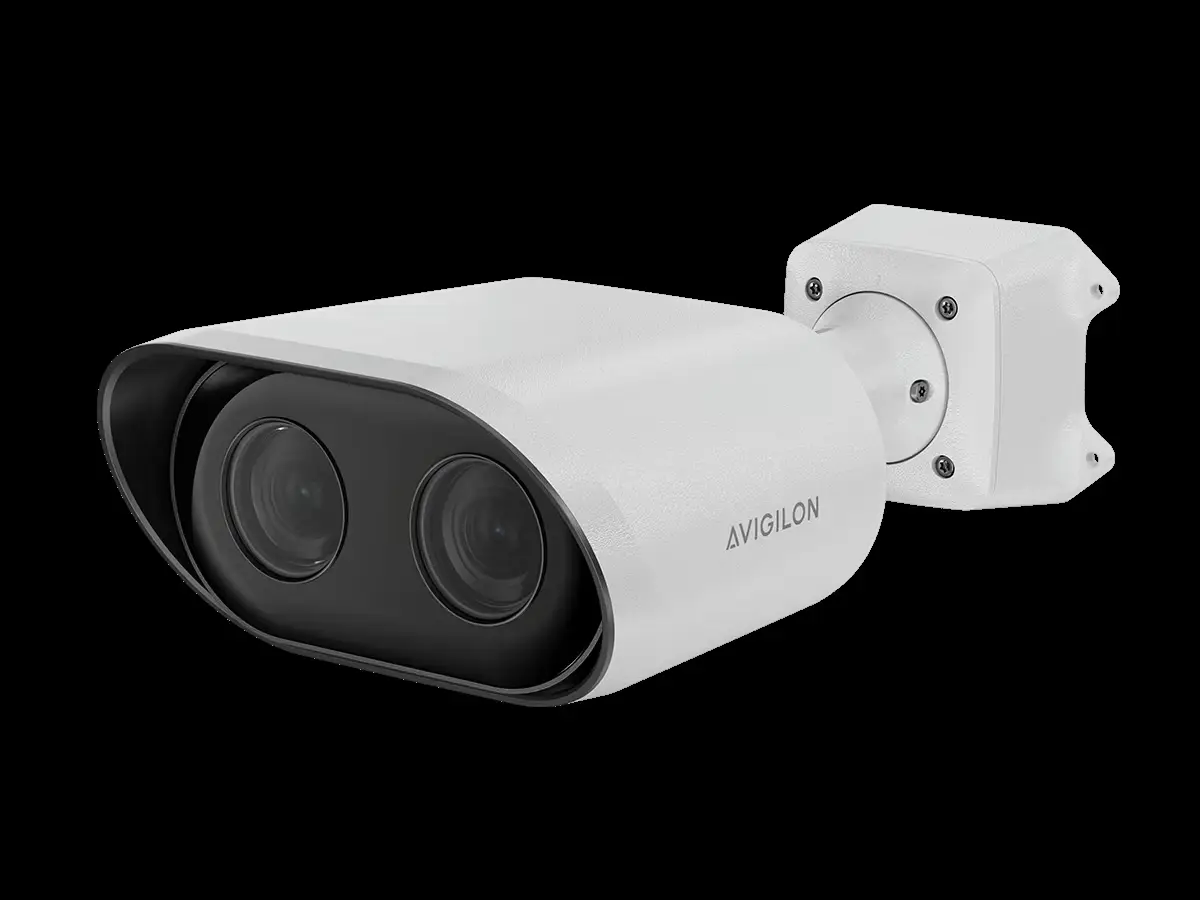
positions.
The L6A Enterprise LPR Camera is Avigilon’s enterprise-class licence plate recognition camera.
Avigilon positions it as a multipurpose camera that captures vehicle data and provides analytical
capability beyond traditional LPR — the plate is the starting point rather than the whole output.
Avigilon summarises the idea as “see the plate, know the story,” and describes all-day coverage and
network-protection considerations as part of the platform.
In practice, that means an L6A is specified the way you would specify any permanent camera on a
critical position. You are choosing a location, a lens and a mounting arrangement to suit a
particular lane, then connecting it into the environment that will record, manage and search the
resulting video and vehicle data. ACG’s
L6A Enterprise LPR camera page
covers the product detail in more depth.
When the L6A is the stronger choice
The L6A tends to be the better fit when the vehicle route is a permanent feature of the
property and the organisation wants vehicle information to become part of its normal security
record. Common examples include:
- A gated commercial entrance where vehicles enter and exit continuously
- A logistics yard where trucks arrive at scheduled and unscheduled times
- A campus roadway or perimeter road with a defined traffic direction
- A parking structure entrance where the lane geometry is already fixed
- Any location where plate data needs to be retained and searchable over time
The practical test is simple: if you would be comfortable running conduit and cable to that
point because the lane is not going to move, the L6A is the appropriate class of device.
What is the Avigilon L6Q?
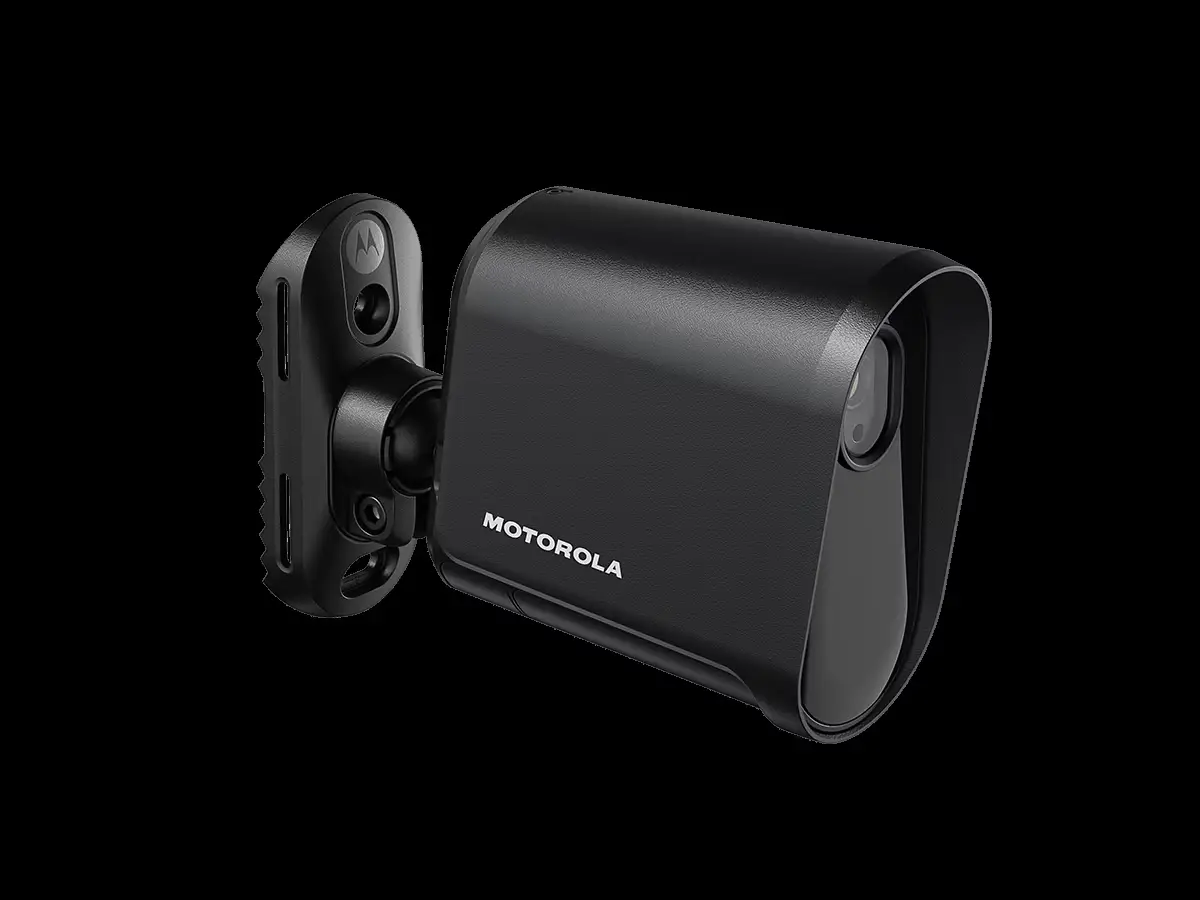
option.
The L6Q Quick-Deploy LPR Camera System takes the opposite approach. Avigilon describes it as a
solar-powered, portable license plate reader with real-time analytics and automation, aimed at
traffic monitoring and security as well as parking enforcement. Its design goals are quick
deployment for faster scanning and the ability to work across a range of environments.
That changes what the planning conversation is about. Instead of cable routes and permanent
mounting, the questions become where the unit can stand, whether the position gives a usable view
of the plate, how long it needs to remain there and who is responsible for moving it. ACG’s
L6Q quick-deploy LPR page covers
that product in more detail.
When the L6Q is the stronger choice
The L6Q earns its place when the requirement is real but the location is not permanent, or when
the infrastructure to support a fixed camera does not exist yet. Situations that typically point
toward the L6Q include:
- A construction site or phased development where the entrance moves as work progresses
- An overflow or seasonal parking area used only part of the year
- A temporary event footprint that needs vehicle monitoring for a defined period
- A remote corner of a property where power and network are genuinely not available
- A location you want to evaluate before committing to a permanent installation
That last case is worth calling out. Using a quick-deploy unit to understand how a lane actually
behaves — traffic volume, approach speed, lighting through the day — can inform a better permanent
design later.
Permanent infrastructure vs. quick deployment
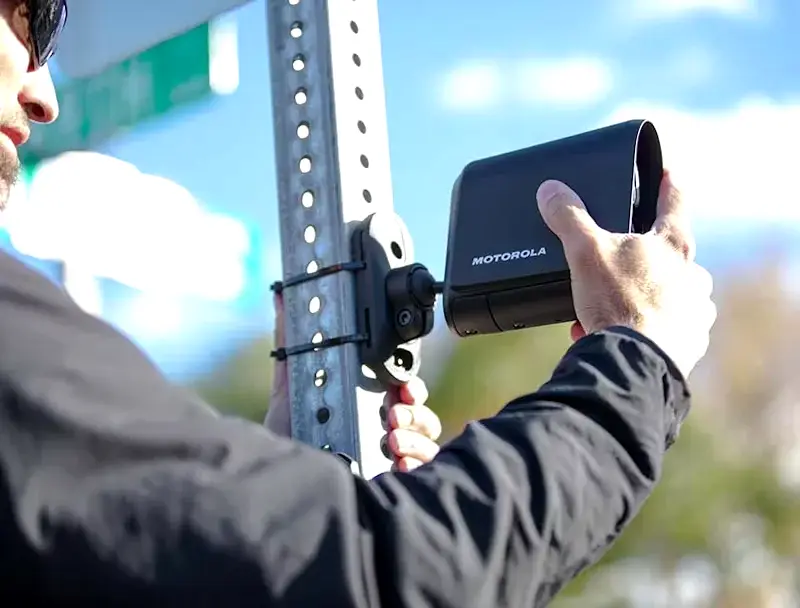
quick-deploy hardware.
It is tempting to treat this as a budget decision, but the more useful framing is commitment.
A permanent installation is a commitment to a position: you are deciding that this lane, this
angle and this view are worth building infrastructure around. A quick-deploy system is a commitment
to a capability without fixing the position.
Two consequences follow. First, a permanent camera can be engineered precisely for its lane —
mounting height, angle and approach distance can all be optimised because they are known and
stable. Second, a portable system trades some of that precision for the ability to be somewhere
else next month.
Neither is inherently better. Plenty of properties end up running both: permanent coverage on
the main controlled entrances, and one or more quick-deploy units for the areas that change.
What about parking, logistics and controlled entrances?
These are the three environments where the question comes up most often, and they tend to sort
themselves out quickly once you look at how the vehicles behave.
Parking
Entrances and exits of a permanent parking structure are strong candidates for fixed LPR, because
the lane geometry is built into the building. Surface lots that expand and contract seasonally are
where quick-deploy units are useful. Avigilon identifies parking enforcement among the L6Q’s
intended applications.
Logistics and yards
Distribution properties usually have a permanent gate plus areas that change with operations —
trailer staging, overflow parking, contractor access during projects. That mix often justifies a
combination. ACG’s
logistics and parking security
page covers the wider design considerations for those properties.
Controlled entrances
Where the goal is to associate vehicles with an entry decision, a fixed camera on a defined lane
is normally the right answer. It is worth being precise here: an LPR camera captures vehicle
information. A gate operator moves a physical barrier, and an access control system authorises
entry. Those are three different jobs, and a plate reader does not perform the other two.
Questions to answer before choosing
Before selecting hardware, work through the following. These questions usually settle the
decision faster than any specification comparison:
- Is this vehicle position permanent, seasonal or temporary?
- Do power and network already reach the location, and at what cost if not?
- What is the lane geometry — approach angle, distance and vehicle speed?
- What are the lighting conditions across a full day and night cycle?
- Who reviews the captured information, and in which system?
- How long does plate and video data need to be retained?
- Will the requirement expand to more lanes or more sites later?
- Does anything about the site’s own policies govern how vehicle data is handled?
The review question matters more than most buyers expect. Capturing plate data is only useful if
someone can find the relevant record later, which makes your
video management platform part of the
LPR decision rather than a separate topic.
How ACG helps plan an Avigilon LPR deployment
ACG Security Solutions is a commercial security integrator. Our role is to translate an
operational requirement — knowing which vehicles came through, and when — into a design that will
actually work at your property.
That normally means reviewing the lanes and entrances involved, checking the available power and
network infrastructure, confirming lighting and approach conditions, and then matching the right
Avigilon hardware to each position. Where a site has both permanent and changing requirements, we
will say so rather than forcing every location into the same product.
We also confirm current product identifiers, documentation and platform support before final
selection, because product families change and a similar-looking camera is not proof of
interchangeability. You can review the broader
Avigilon LPR service, or the
wider commercial video surveillance offering
that LPR usually forms part of.
Talk through your vehicle monitoring requirement
Tell us where vehicles enter your property, whether those positions are permanent, and what your
team needs to be able to look up afterwards. We can turn that into a practical Avigilon LPR plan —
permanent, quick-deploy or a combination of both.
Request an Avigilon LPR consultation
MOTOROLA, MOTO, MOTOROLA SOLUTIONS and the Stylized M Logo are trademarks or registered
trademarks of Motorola Trademark Holdings, LLC and are used under license. All other trademarks are
the property of their respective owners.

Comments are closed for this article!