COMMERCIAL CONSTRUCTION SECURITY
Construction Site Security Systems
Construction projects create security requirements that change from one phase of the job to the next. Entrances move, fencing changes, equipment and materials are relocated, and permanent power, networking or final camera locations may not yet exist. Construction site security systems help commercial project teams maintain useful visibility and control while those conditions continue to change.
ACG Security Solutions helps contractors, developers, facility stakeholders and project teams evaluate the appropriate mix of mobile surveillance, fixed cameras, access control, gate security, analytics and related infrastructure for active commercial jobsites.
The goal is not to force every construction project into the same security package. The goal is to identify what the project needs to observe or control today while keeping the finished property’s long-term security requirements in view.
Commercial construction security planning for projects in Georgia, the Southeast and qualifying locations nationwide.
What is a construction site security system?
A construction site security system is a combination of commercial security technologies and operating procedures used to improve visibility, document activity and control access around an active jobsite.
Depending on the project, the security plan may include fixed video surveillance, mobile solar security towers, temporary camera deployments, controlled vehicle entry, access control, video analytics, thermal imaging or supporting network infrastructure.
Construction differs from a completed commercial facility because the property itself is still changing. A camera location that works during site preparation may become ineffective after structural work begins. A temporary entrance may disappear. Material storage may move. Permanent cabling may not yet be available.
That is why construction security should be planned around the project phase rather than treated as a smaller version of the finished building’s permanent system.
Common construction site security requirements
Commercial jobsites rarely have only one security concern. The areas that matter most often change throughout the project, so the design needs to account for both current operations and the next stage of construction.
Materials and equipment areas
Construction sites may contain tools, materials, machinery and staged equipment across different portions of the property. Surveillance placement should be based on where those assets are actually stored rather than assuming one permanent viewpoint will cover every phase of the job.
Temporary entrances and deliveries
Contractors, deliveries, inspectors, vendors and equipment may enter through temporary access points that change as the project develops. Cameras, gate controls and access procedures can help provide clearer visibility around those operating points.
Changing perimeters
Temporary fencing, grading work, new structures and changing traffic patterns can alter the practical perimeter of a construction site. Security coverage should be reviewed as those conditions change.
After-hours site activity
Construction teams may need recorded visibility during evenings, weekends or periods when fewer personnel are present. The design should reflect the areas that remain important outside normal working hours.
Temporary infrastructure
Permanent power, cabling and network infrastructure may not be complete during early construction. Mobile or temporary surveillance can provide another option while the finished system is still being built.
Transition to the completed property
Construction security should eventually connect to the finished facility’s long-term requirements. A temporary deployment may be removed, repositioned or replaced by permanent cameras, access control and other building security systems as the project reaches completion.
Mobile security towers for changing construction sites
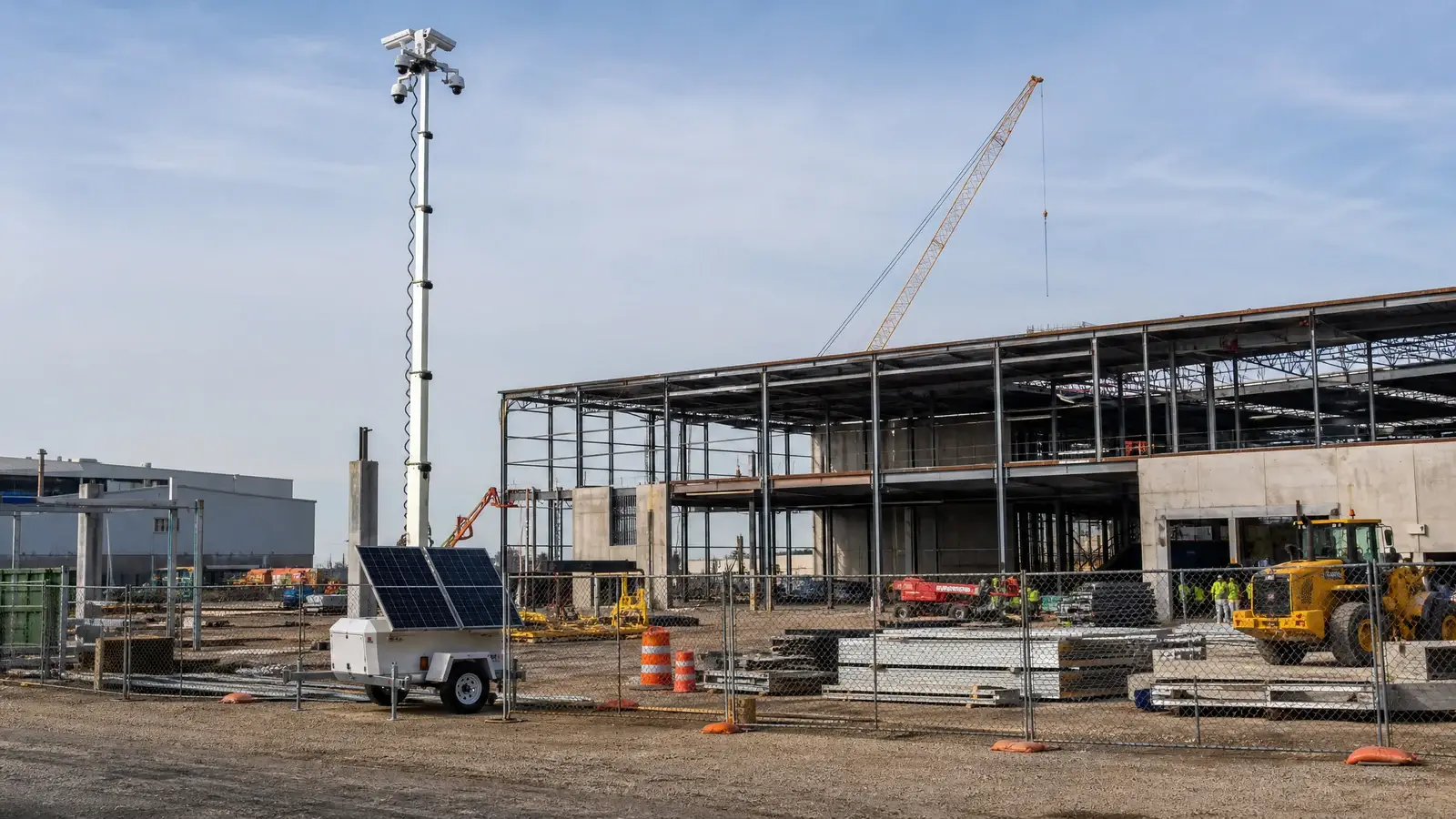
Mobile solar security towers can be useful when construction-site surveillance is needed before permanent infrastructure is complete or when the most useful camera position is likely to move.
These platforms are also commonly described as mobile surveillance towers, surveillance trailers or security camera trailers. Regardless of terminology, the important questions are what the project needs to observe, where the system can be positioned and how authorized users will access recorded or live video.
A mobile tower can provide an elevated surveillance position around temporary entrances, equipment areas, parking, staging zones or remote portions of a site. As construction progresses, the tower may remain in place, move when practical or eventually give way to permanent surveillance designed for the finished facility.
Mobile surveillance should not automatically be selected for every project. If camera positions are stable and permanent infrastructure is already available, a fixed commercial surveillance system may be the more appropriate investment. The two approaches are examined side by side in a separate guide to mobile solar security towers vs. fixed cameras.
Access control and vehicle-entry security during construction
Not every jobsite security challenge is solved with another camera. Some construction projects need clearer control of who enters the property, where vehicles are allowed to travel or which temporary areas should remain restricted.
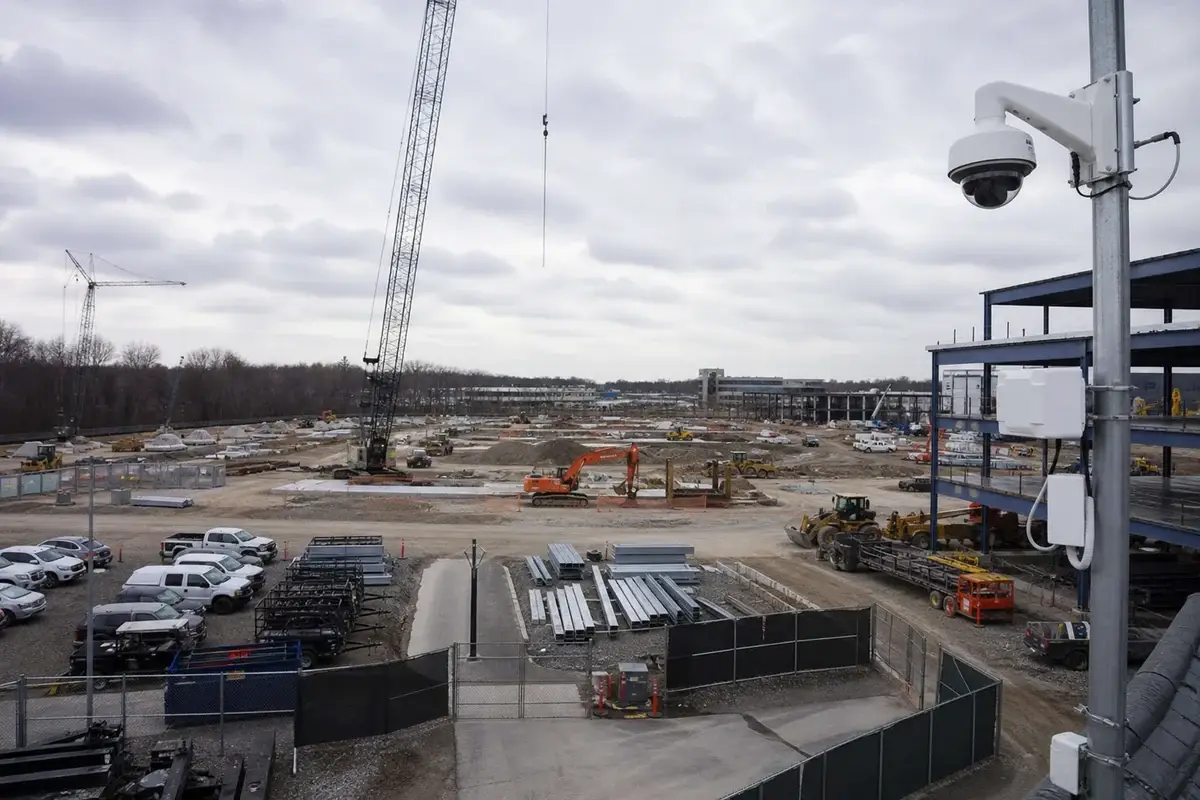
Depending on the project, construction access planning may involve controlled gates, temporary entry procedures, credentialed access control or surveillance positioned around the main vehicle and pedestrian approaches.
The right approach depends on how the project operates. A large commercial development with repeated deliveries and multiple trades may require a different entry strategy from a smaller controlled site. Where the requirement is not yet clear, security consulting can help define the objective before equipment is selected.
Security technology should support the contractor’s operating process rather than create unnecessary friction at an already busy entrance.
Video analytics and thermal imaging on construction sites
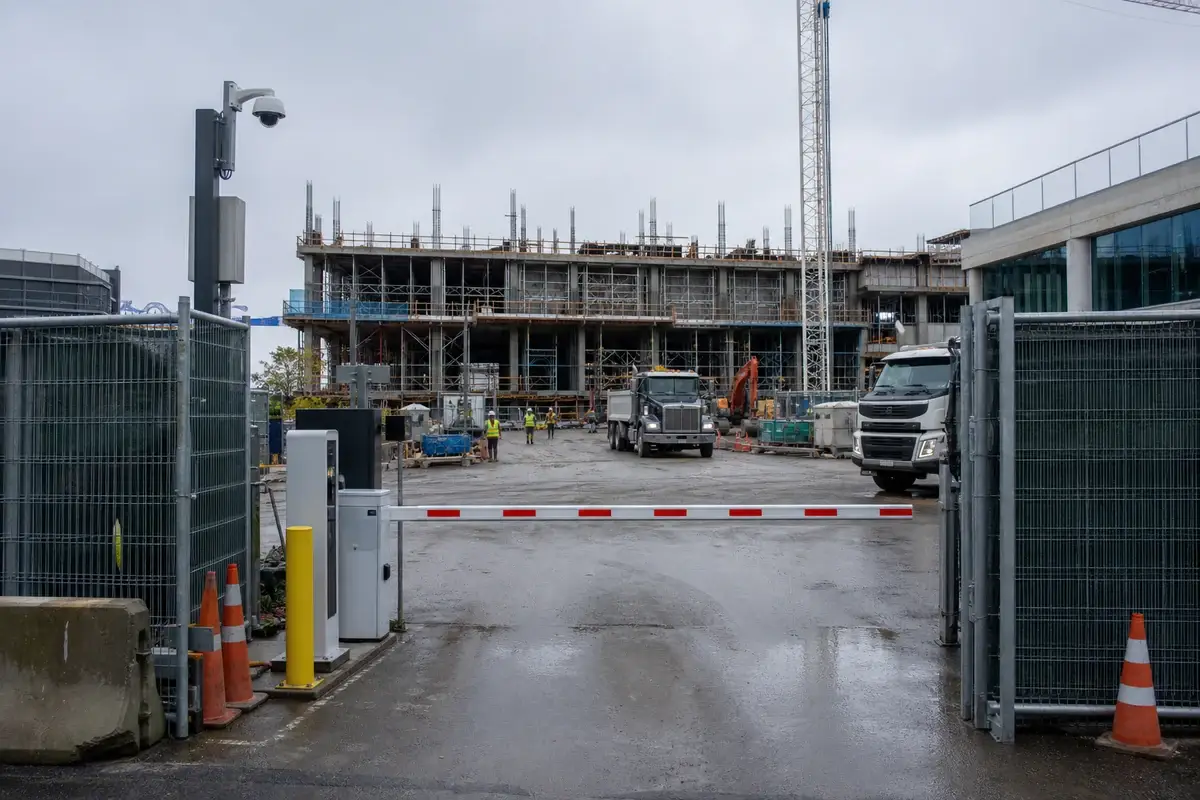
Construction environments can produce complex camera scenes. Workers, equipment, vehicles, fencing, changing lighting and temporary structures can all affect what a camera sees.
Video analytics can help focus attention on configured activity within defined areas, but performance depends on camera placement, image quality, environmental conditions and correct rule configuration.
Thermal imaging can provide another way to visualize heat patterns in low-light or visually challenging exterior conditions. It does not replace conventional surveillance automatically, and the appropriate technology depends on the task, distance and level of detail required.
ACG evaluates analytics or thermal technology as part of the broader surveillance objective rather than adding features simply because they are available.
Remote viewing and recorded construction activity
A construction surveillance system may provide authorized personnel with access to live or recorded video when the selected equipment and connectivity support those functions.
Before deployment, ACG clarifies:
- Who needs access to the video.
- Whether footage will be reviewed live, recorded or both.
- Which portions of the jobsite need general awareness versus identifying detail.
- What storage or retention approach is required.
- How alerts should be handled if analytics are used.
- What cellular, Wi-Fi or other network connectivity is available.
These decisions help determine camera placement, connectivity and recording requirements before equipment is installed.
How ACG approaches construction site security planning
1. Review the current project phase
Identify active entrances, equipment and material areas, parking, perimeter conditions and the parts of the site where additional visibility or control matters most.
2. Separate temporary needs from permanent needs
Determine which security requirements exist only during construction and which ones should eventually become part of the completed property’s long-term design.
3. Match the appropriate security layers
Evaluate mobile surveillance, fixed cameras, access control, gate security, analytics, thermal imaging and related infrastructure according to the actual requirements.
4. Deploy around site operations
Position equipment so it supports the approved surveillance and access objectives without unnecessarily interfering with construction activity.
5. Reassess as construction changes
Review the security plan when fencing, entrances, buildings, equipment areas or operating zones change significantly.
Temporary construction security vs. permanent building security
Construction security and permanent facility security solve related but different problems.
| Decision factor | Construction-phase security | Permanent facility security |
|---|---|---|
| Site condition | Changing site layout, temporary access points and evolving work zones. | Stable facility layout and established operating patterns. |
| Infrastructure | May operate before finished power, network or permanent mounting locations exist. | Can be designed around completed power, networking and building infrastructure. |
| Camera locations | May need to move as the project progresses. | Generally selected for long-term coverage positions. |
| Access | Temporary contractor, delivery and project access may dominate the requirement. | Long-term employee, visitor and facility access processes become central. |
| Best use | Protecting active project operations while conditions continue to change. | Supporting the completed property throughout normal long-term operations. |
A project may use both systems in sequence. Temporary construction security can support the active jobsite while the permanent commercial security system is designed for the finished property.
Planning the transition from jobsite security to permanent building security
One of the most important construction-security decisions is what happens when the project ends.
Temporary cameras should not force poor permanent camera locations. A mobile security tower should not automatically remain simply because it was useful during construction. Likewise, a finished facility should not discover at turnover that access control, surveillance, network requirements and gate security were considered separately.
A phased approach allows project teams to address immediate security needs while planning for the systems the completed facility will require.
ACG works across surveillance, access control, structured cabling and related commercial security technologies, which allows the transition from temporary project conditions to permanent operations to be considered earlier.
Why commercial project teams work with ACG Security Solutions
Construction sites can require temporary equipment today and permanent integration tomorrow. Working with a commercial security integrator allows both phases to be evaluated together.
ACG Security Solutions works across mobile surveillance, fixed video surveillance, access control, video analytics, thermal imaging, structured cabling, gate systems and security consulting. The same team also plans warehouse and logistics security systems for the distribution properties many commercial projects eventually become.
That broader capability helps determine whether the project needs a temporary tower, fixed cameras, controlled access or a combination rather than beginning with a predetermined piece of equipment.
- Commercial and enterprise security focus
- Temporary and permanent surveillance planning
- Mobile and fixed security options
- Access-control and vehicle-entry planning
- Requirements-first system design
Construction site security systems FAQs
A construction site security system is a combination of commercial security technologies and operating procedures used to improve visibility, document activity and control access around an active jobsite.
Depending on the project, construction security may include video surveillance, mobile security towers, access control, controlled gates, video analytics, thermal imaging and supporting network infrastructure.
They can be useful when a site needs temporary or changing camera positions, especially before permanent power, networking or final mounting locations are complete.
Yes. Fixed cameras may make sense in stable portions of a project or where permanent infrastructure already exists. The final design should distinguish temporary construction needs from the completed property’s long-term requirements.
Yes. Some commercial projects use controlled access for contractors, visitors, restricted areas or temporary entrances depending on the way the site operates.
Video analytics may be useful for configured activity or defined areas when camera placement, image quality and environmental conditions support the intended use.
Temporary systems may be removed or repositioned, while permanent surveillance, access control and other building-security systems become part of the completed property.
Contact ACG Security Solutions with information about the project phase, site layout, areas of concern and available infrastructure so the team can evaluate appropriate options.
Plan the right security system for your construction project
Tell ACG what type of commercial project you are protecting, which portions of the jobsite concern you most and how the site is expected to change. The team can help determine which security layers fit the current construction phase and the completed facility.