
BIOMETRIC CREDENTIAL SECURITY
Commercial Biometric Access Control
Commercial biometric access control uses an enrolled physical characteristic as part of the authorization process for a controlled door or restricted area. Depending on the selected system, an organization may evaluate fingerprint, facial, iris or other supported biometric methods as alternatives to—or factors used with—cards, mobile credentials and PINs.
ACG Security Solutions helps businesses and enterprise facilities determine where biometric credentials fit within a broader commercial access-control system. That review includes the reader, physical door, lock, controller, management software, enrollment process, user permissions and the operating policies that determine how access is granted or removed.
Biometrics should not be selected simply because the technology appears advanced. The controlled area, user population, daily entry volume, privacy requirements, enrollment process, accessibility needs and compatibility with existing equipment should all influence the decision.
Commercial biometric access-control planning for organizations in Georgia, the Southeast and qualifying projects nationwide.
What is biometric access control?
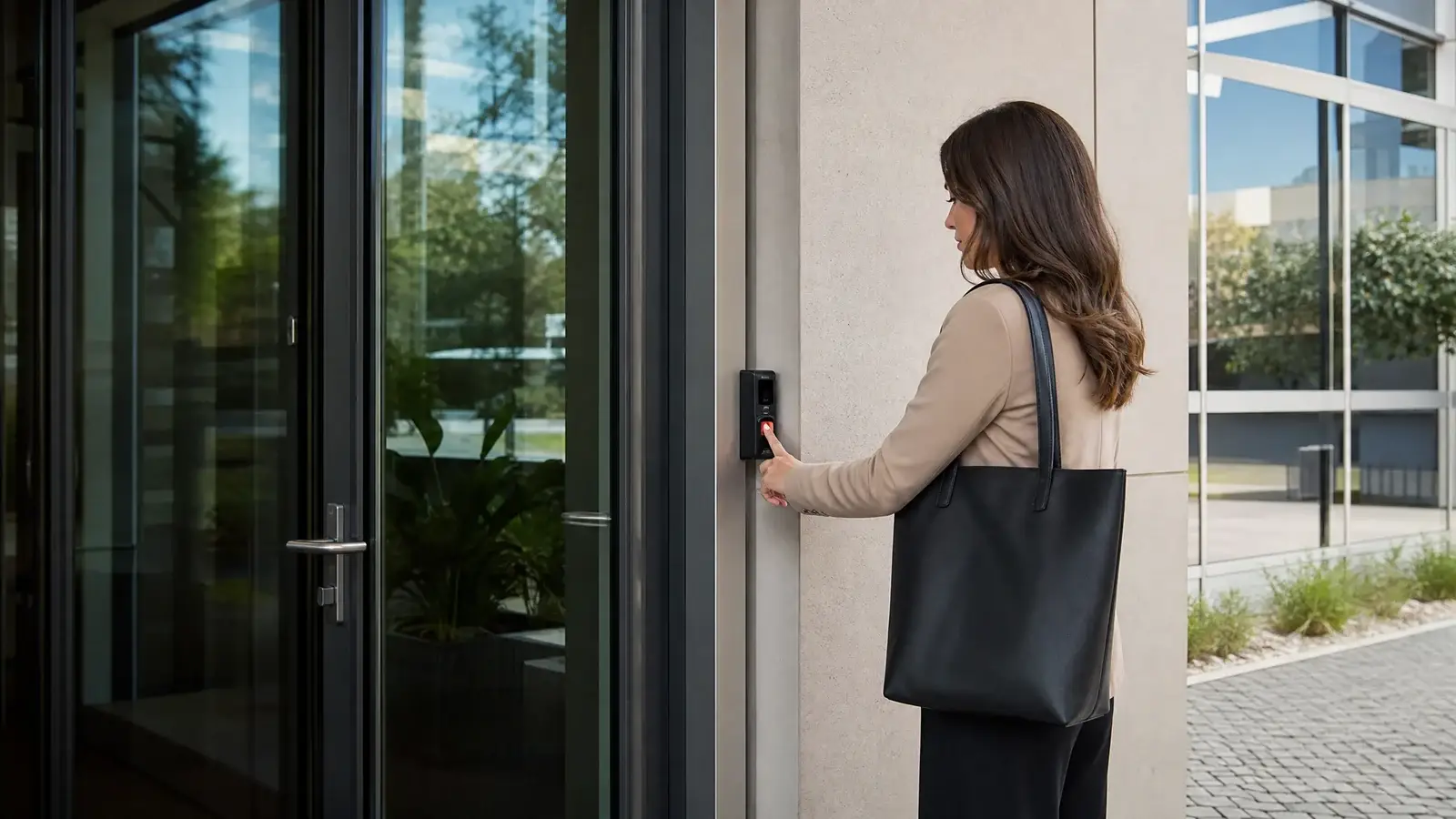
Biometric access control uses a measurable physical characteristic as a credential or authentication factor within an electronic access-control system. The system compares a live presentation with enrolled information according to the capabilities and configuration of the selected platform.
Unlike a card or mobile credential, a biometric factor is connected more directly to the enrolled individual. That characteristic can support stronger identity binding in selected applications, but it does not remove the need for access permissions, reader hardware, door controls, software administration and a defined process for managing users.
The biometric reader is only one component of the system. The physical opening still depends on appropriate commercial door hardware, locking, power, controllers, network connectivity and system logic. An authorized match must still translate into a properly controlled door event.
Biometric credentials therefore belong within the larger commercial access control system rather than functioning as a standalone replacement for every other credential type or security measure.
Biometric credential methods and where they may fit
Different biometric modalities create different user interactions and operating requirements. The appropriate method depends on the selected platform, controlled area, user population and organizational policy.
Fingerprint credentials
Fingerprint readers evaluate enrolled fingerprint information as part of an access decision. They may fit selected commercial doors where users can interact reliably with the reader and the organization has an appropriate enrollment and administration process.
Facial credentials
Compatible facial-biometric systems use enrolled facial information during authorization. Lighting, reader or camera placement, user positioning, enrollment quality and privacy procedures should be considered before the system is selected.
Iris credentials
Iris-based systems use characteristics of the eye as an authentication factor. Their suitability depends on the platform, reader design, expected user workflow and the security requirements of the controlled area.
Biometrics with cards or mobile credentials
A biometric factor may be combined with a card, mobile credential or PIN when the organization wants more than one authorization step. Multi-factor entry can add complexity, so it should be reserved for areas where that additional verification supports a defined requirement.
Restricted-area access
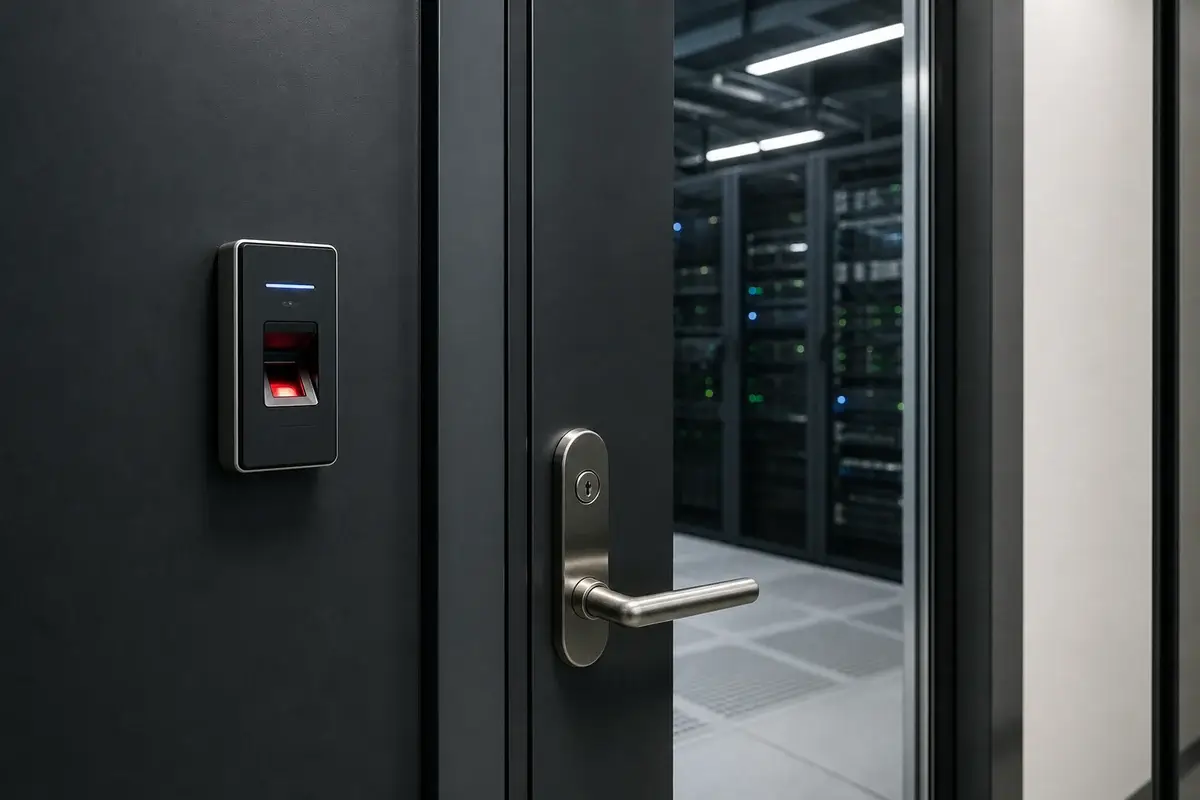
Biometric credentials may be evaluated for server rooms, controlled technical spaces, sensitive records areas or other commercial locations where the organization wants authorization tied more closely to an enrolled person.
Time and attendance integration
Some compatible biometric platforms may support time, attendance or workforce-management functions in addition to door access. Those capabilities depend on the selected system and should be verified rather than assumed.
Where biometric access control makes sense
Biometric credentials are most useful where stronger individual identity binding supports a specific access-control objective. The technology should be applied to the doors or areas where that benefit justifies the enrollment, administration and user-experience requirements.
Restricted technology rooms, controlled research or technical areas, secure records locations and selected executive or critical commercial spaces may be candidates for biometric access. The organization should define why a card, mobile credential or PIN is not sufficient before choosing a biometric factor.
General employee entrances do not automatically require biometrics. A card or mobile credential may provide a simpler and more practical workflow for large user populations, visitors or doors where the risk and operating requirements do not justify additional biometric administration.
ACG evaluates the controlled area, users, traffic patterns, existing access system and organizational policy before recommending where biometric readers should be used and where another credential type may be more appropriate.
Enrollment, privacy and user administration
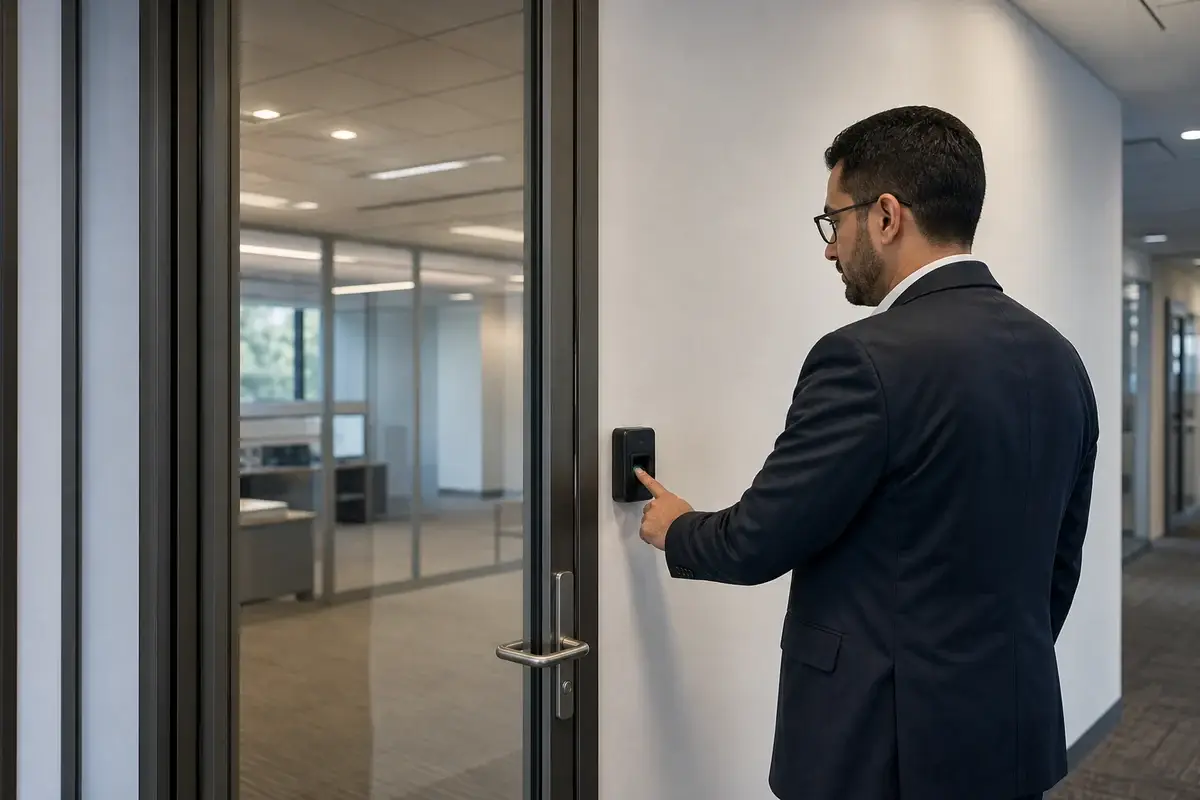
A biometric system requires an enrollment process so approved users can be associated with the selected biometric credential and the permissions assigned to them. Enrollment quality and administration affect the daily user experience as well as the organization’s ability to add, change or remove access.
Organizations should establish clear policies for who may be enrolled, who may administer biometric records, how permissions are reviewed and how access is removed when a role or relationship changes. Applicable law, internal policy and contractual obligations may also affect how biometric information is handled.
The implementation should account for users who cannot or should not use the selected modality. An alternative credential or exception workflow may be required so the system does not create an unnecessary barrier for approved users.
These decisions belong in the design phase. Installing a reader first and deciding enrollment, privacy and exception procedures later can create administrative and user-experience problems that the hardware alone cannot solve.
Biometrics as part of a complete access control system
A biometric reader still controls a physical opening through the larger access-control architecture. The door, locking hardware, controller, network, management platform and authorization rules remain essential to the final result.
Commercial video surveillance may provide useful visual context around selected controlled entrances when the organization’s workflow requires it. That does not mean every biometric reader automatically needs a camera; the surveillance objective should determine the placement.
Structured cabling and network infrastructure can also affect how controllers, readers and management systems communicate. Existing infrastructure should be reviewed before the project assumes that a new biometric device can be added without other changes.
ACG evaluates the biometric credential as one layer within the complete system. Learn more about commercial video surveillance and commercial structured cabling as supporting parts of an integrated facility-security design.
What ACG needs to know before recommending biometric access
Biometric access should begin with the controlled area and user requirements—not with a device demonstration. Before recommending a modality or reader, ACG evaluates:
- Which doors, gates or restricted areas are being considered for biometric authorization.
- The number and types of users who need access, including employees, contractors or temporary users.
- The organization’s preferred credential policy and whether biometrics will be used alone or with another factor.
- Existing readers, controllers, door hardware, software and network infrastructure that may remain in service.
- Enrollment, exception, user-administration and access-revocation requirements.
- Privacy, audit, internal-policy or other organizational requirements that affect implementation.
These inputs help determine whether biometrics solves a real access-control problem and which system architecture fits the facility.
How ACG scopes biometric access control
1. Define the controlled areas
Identify which doors or spaces justify biometric credentials, who needs access and what security or operational objective the organization is trying to achieve.
2. Review users and operating conditions
Evaluate the user population, daily entry volume, physical environment, accessibility needs and other factors that may affect enrollment or credential use.
3. Evaluate modality and system compatibility
Review fingerprint, facial, iris or supported multi-factor options alongside existing or proposed controllers, readers, software and door hardware.
4. Configure enrollment and permissions
Establish approved users, enrollment procedures, schedules and permissions, then commission the controlled openings according to the approved design.
5. Review lifecycle and expansion requirements
Consider how users will be added or removed, how exceptions will be handled, whether more doors may be added and how the system should evolve with the organization.
Biometrics vs. cards and mobile credentials
Biometric, card and mobile credentials can all support commercial access control. Their operating characteristics differ, and many organizations use more than one method across a facility.
The best design may use biometric credentials at a limited number of restricted doors while relying on cards or mobile credentials for general employee access.
| Decision factor | Biometric credential | Card / mobile credential |
|---|---|---|
| What the user presents | An enrolled physical characteristic. | An approved physical card, fob or digital mobile credential. |
| Connection to the user | Tied more directly to the enrolled individual. | Assigned to a user but may be lost, replaced or shared depending on policy and credential type. |
| Administration | Requires enrollment, biometric-user management and an exception process. | Requires issuance, assignment, revocation and replacement of credentials. |
| User interaction | Depends on the modality, reader position and enrollment quality. | Typically involves presenting, tapping or activating the approved credential. |
| Best use | Selected areas where stronger identity binding supports a defined requirement. | Broad commercial access where simpler credential administration may be preferred. |
When biometrics may not be the right credential
Biometric technology is not automatically the best choice simply because it can tie authorization more closely to an enrolled individual.
A high-volume general entrance may be easier to administer with cards or mobile credentials. Some users may require an alternative credential, and privacy or organizational policies may make a biometric process unsuitable for a particular workforce or location.
Existing controllers, readers, software and door hardware can also affect compatibility and migration options. A reader that is not supported by the existing platform may require broader system changes than the organization initially expects.
A requirements-first design allows biometrics to be used where it creates meaningful value while avoiding unnecessary complexity at doors where another credential method provides a better operating fit.
Why organizations bring ACG into biometric access projects
Biometric access touches the credential, physical door, controller, network, software and user-administration process. Treating the reader as an isolated product can leave important implementation questions unresolved.
ACG Security Solutions works across access control, video surveillance, structured cabling, commercial security consulting and related systems. That broader capability helps evaluate the reader, door hardware, credential policy and supporting infrastructure together.
The goal is not to make every door biometric. It is to determine where stronger identity binding supports a real requirement and how that credential should operate within the rest of the facility’s access-control environment.
- Commercial and enterprise access-control focus
- Fingerprint, facial and iris modality evaluation
- Multi-factor and mixed-credential planning
- Integration with broader access-control systems
- Requirements-first design before reader selection
Biometric access control FAQs
Biometric access control uses a measurable physical characteristic such as a fingerprint, face or iris as a credential or authentication factor within an electronic access-control system.
Depending on the selected platform, commercial access-control systems may support fingerprint, facial, iris or other biometric methods.
Biometrics and cards have different operating characteristics. Biometrics can tie authorization more directly to an enrolled individual, while cards may offer simpler credential administration. The appropriate method depends on the facility and its requirements.
Yes. Compatible access-control systems may use a biometric factor together with a card, mobile credential, PIN or another approved factor when the organization requires more than one authorization step.
Biometric credentials may be worth evaluating for selected restricted areas such as server rooms, controlled technical spaces or other commercial locations where stronger identity verification supports the organization’s requirements.
Yes. A biometric system requires an enrollment process so approved users can be associated with the selected biometric credential and appropriate access permissions.
Sometimes. Existing controllers, readers, software, door hardware and platform compatibility should be reviewed before deciding whether biometric readers can be added or broader modernization is required.
Contact ACG Security Solutions with information about the property, controlled areas, existing access-control equipment, user population and the biometric credential methods being considered.
Plan biometric access for your facility
Tell ACG which doors or areas require stronger identity verification, what access-control equipment is already installed and how employees, contractors or other approved users need to enter. The team can help determine whether biometric, card, mobile or mixed credentials fit the facility.