COMMERCIAL AERIAL SECURITY INTEGRATION
Commercial Surveillance Drones
Commercial surveillance drones can provide a temporary aerial viewpoint for large properties, industrial sites, construction environments and other locations where a fixed camera does not provide the required perspective. ACG Security Solutions focuses on the camera and security-integration side of these projects, including evaluation of compatible thermal, analytical and multisensor camera configurations for commercial drone platforms.
A drone is not automatically the right answer for every surveillance requirement. Flight operations, airspace, site rules, platform limitations, weather, payload capacity, power, communications and data handling all affect whether an aerial system is practical. ACG begins with the security objective and the imaging requirement, then determines how a drone-based camera platform may fit alongside fixed video surveillance, thermal imaging and mobile solar security towers.
What is a commercial surveillance drone?
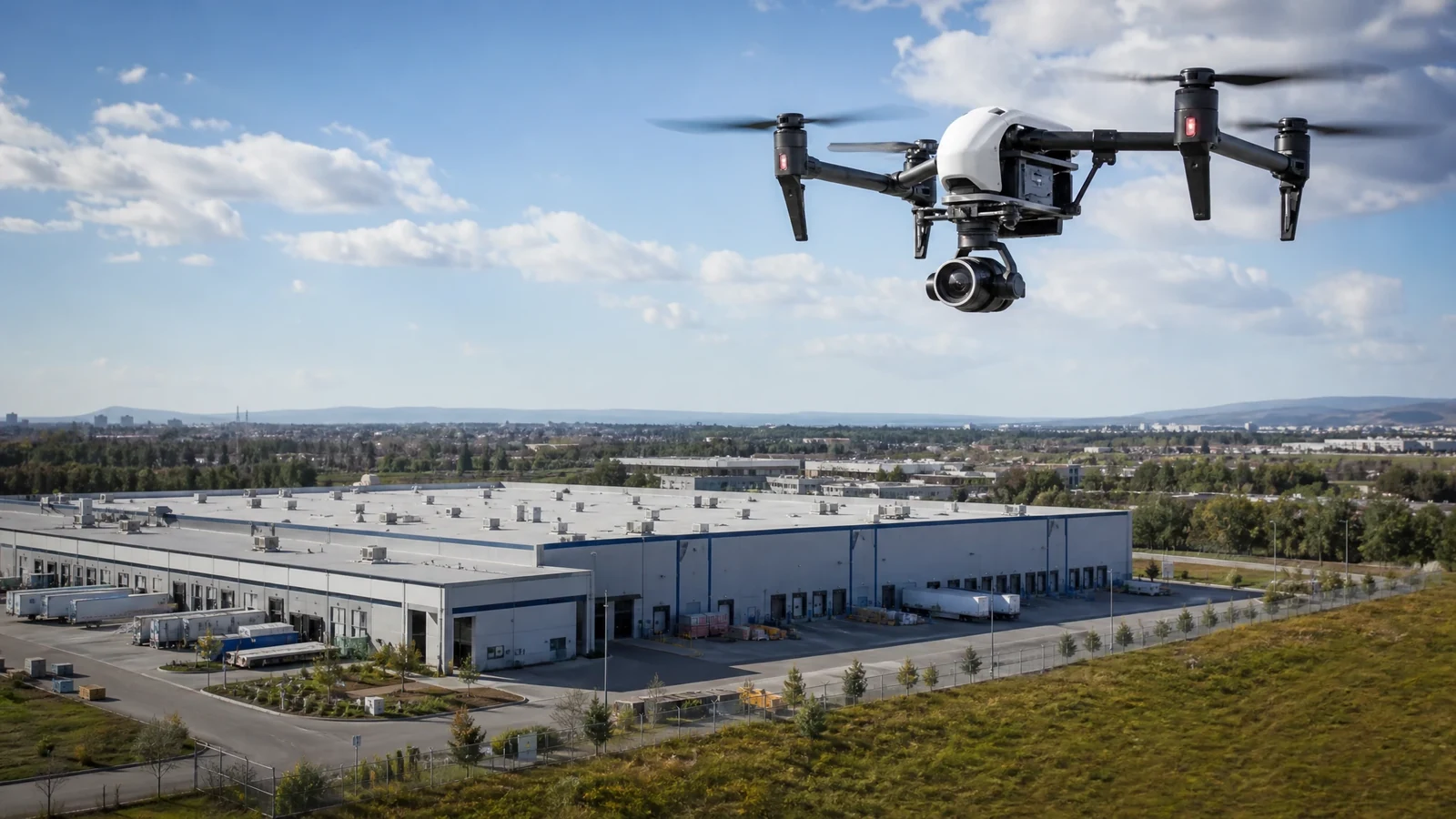
A commercial surveillance drone is an unmanned aerial platform equipped with a camera or compatible sensor package for authorized commercial observation, inspection or security-related imaging. The drone provides mobility and an elevated viewpoint; the camera or sensor provides the information the organization is trying to collect.
The useful part of the system is not the aircraft alone. The platform, payload, mounting, power, communications, recording method and operator workflow must work together. A thermal camera may be useful for one application, while a conventional visible-light or multisensor configuration may be more appropriate for another. Analytics may also be available in some supported camera or software environments, but any capability must be evaluated against the selected equipment and intended use.
Commercial applications organizations may evaluate
Large-property overview
Aerial imaging can help an organization view a large property from a perspective that is difficult to achieve with ground-mounted cameras alone. Industrial campuses, expansive commercial sites and multi-building properties may use an aerial viewpoint for authorized observation or inspection tasks. The value comes from seeing the relationship between areas, not from assuming a drone should replace the fixed cameras that provide continuous coverage.
Commercial construction observation
Construction environments change frequently. Access points move, materials are relocated, temporary fencing changes and work progresses across the property. A drone-based camera may support authorized visual documentation or site observation when the project team has the appropriate operating process in place. For continuous ground-level coverage, a mobile solar security tower or fixed camera system may still be the more appropriate tool.
Industrial-facility inspection
Industrial properties can include roofs, exterior equipment areas, yards, elevated structures and other locations that are easier to view from above. A compatible aerial camera can support visual or thermal observation of selected areas when the application, platform and operating conditions permit. ACG does not present drone imagery as a substitute for engineering, maintenance or diagnostic inspection; the image is a source of visual information for authorized users.
Warehouse and logistics property visibility
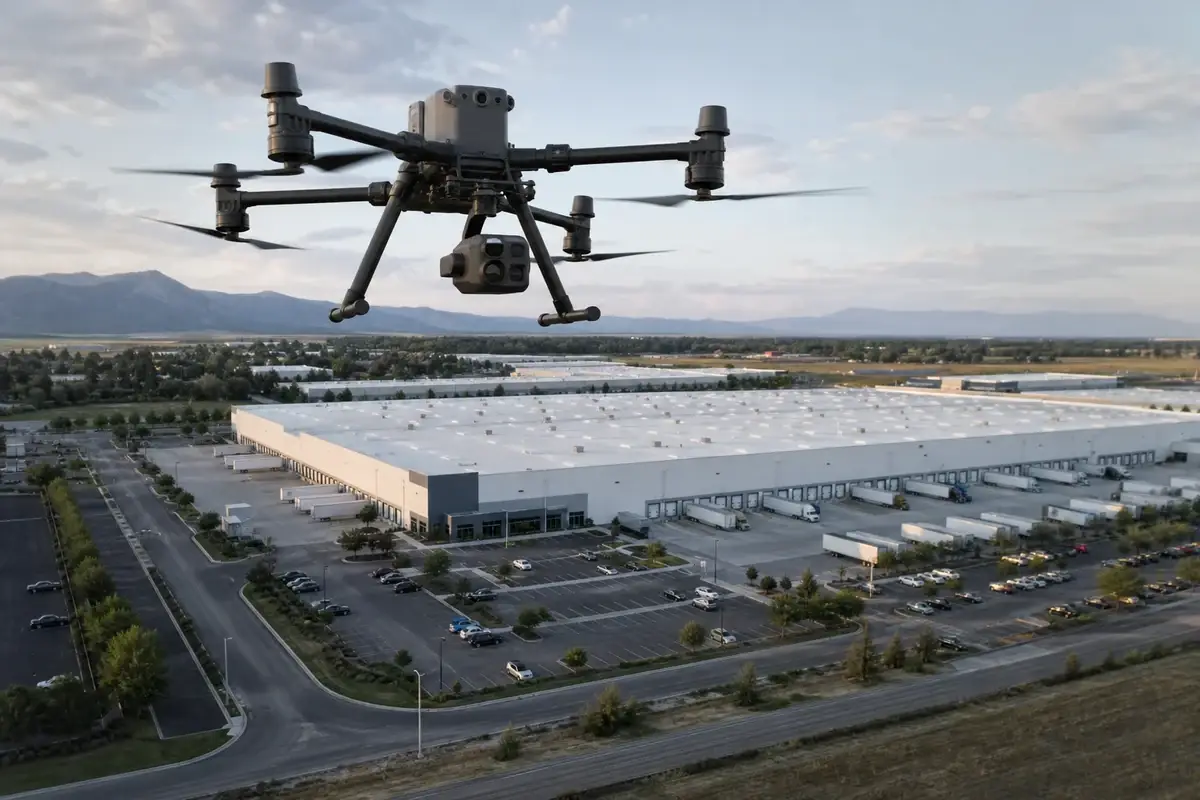
Distribution centers and logistics properties often include truck courts, trailer areas, vehicle circulation and large exterior spaces. An aerial view may help provide broader situational context for a defined task or authorized observation period. Ground-mounted video remains important for continuous identification-level views, gate activity and fixed operational workflows.
Perimeter or remote-area observation
Some properties have remote boundaries, undeveloped areas or locations that are difficult to observe from an existing building. A drone may offer a temporary vantage point for an authorized inspection or assessment. If the requirement is continuous surveillance, ACG can compare the aerial approach with fixed cameras, thermal imaging or mobile tower deployment before recommending a system direction.
Thermal or multisensor aerial imaging
Thermal and multisensor cameras can add different types of visual information to an aerial platform when the payload and integration are compatible. Thermal imaging may support observation where heat contrast is useful, while multisensor configurations can combine complementary views. The exact capability depends on the selected camera, aircraft, mounting, power and software environment.
Camera retrofit and payload integration
A commercial drone project must begin with compatibility. The aircraft has a defined payload capacity, balance requirement, mounting method, power architecture and communications environment. A camera that performs well on a fixed pole is not automatically suitable for an aerial platform.
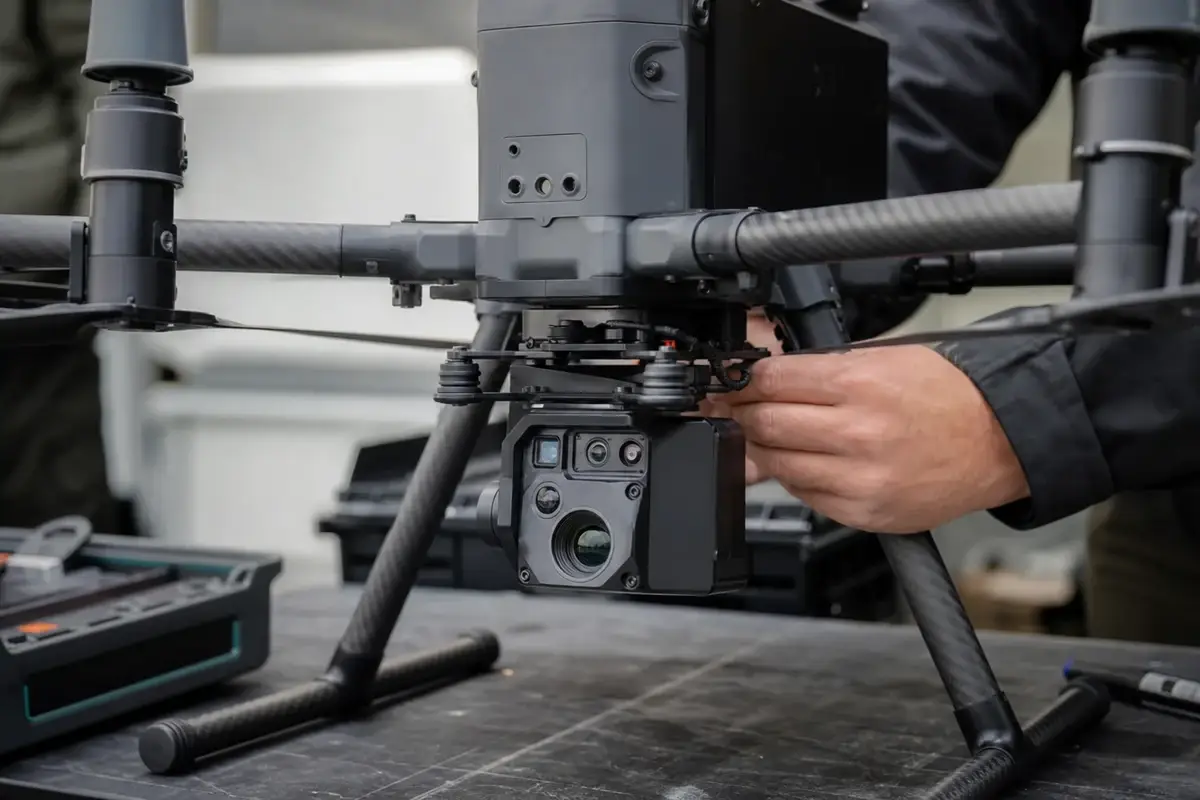
ACG can help evaluate the security camera requirement and how a compatible analytical, thermal or multisensor payload may be integrated with an appropriate commercial drone platform. That evaluation should consider physical mounting, weight, power, field of view, recording, communications and the way authorized users expect to receive or review the imagery.
Thermal, analytical and multisensor camera options
Different camera technologies answer different questions. A conventional visible-light camera can provide familiar visual detail when lighting and scene conditions are appropriate. A thermal camera detects thermal energy and may provide useful contrast in low-light or heat-differentiated scenes. A multisensor payload may combine more than one imaging method to give users complementary perspectives.
Video analytics can also support certain commercial workflows when the selected camera and software environment are compatible. Analytics should be treated as a configured software capability, not as a guarantee that the system will automatically understand every object or condition. Camera angle, scene complexity, motion, altitude, image quality and the specific analytic rule can all affect usefulness.
Drones alongside fixed cameras and mobile towers
Aerial, fixed and mobile ground-based systems solve different surveillance problems. Fixed cameras provide continuous views of known locations such as entrances, gates, loading areas and building perimeters. Mobile solar security towers provide a transportable elevated ground platform for temporary or changing sites. Drones provide a mobile aerial viewpoint for authorized operations.
ACG evaluates duration, viewpoint, infrastructure and operating responsibility rather than positioning one platform as universally superior.
What ACG needs before evaluating a drone-camera integration
A useful evaluation requires more than the name of a drone model. ACG needs to understand the complete imaging and operational context.
- The commercial use case. What visual information does the organization need, and why is an aerial viewpoint being considered?
- The aircraft platform. What drone is already owned or being evaluated, and what payload and integration limits apply?
- The camera or sensor requirement. Does the task call for visible-light, thermal, multisensor or another supported imaging approach?
- Operational responsibility. Who will operate the aircraft, manage flight authorization and maintain the operating procedures for the site?
- Data and review workflow. Does imagery need to be viewed live, recorded for later review, or transferred into another compatible security workflow?
- Site and environmental conditions. What property layout, obstacles, operating areas and environmental factors affect the intended use?
These details allow the project team to separate the security-imaging requirement from the aviation and operational responsibilities that must be handled by the appropriate parties.
How ACG approaches a commercial drone-camera project
1. Define the imaging objective
ACG starts by identifying what the organization needs to see and why an aerial perspective is being considered. The objective may involve temporary overview, site documentation, thermal observation or another defined commercial use. This prevents equipment selection from driving the project before the requirement is clear.
2. Review the platform and payload constraints
The aircraft model, supported payload, mounting, power, communications and manufacturer limitations are reviewed against the proposed camera. If the combination is not technically appropriate, the project should not proceed on the assumption that a custom attachment will solve the mismatch.
3. Select the camera-integration approach
ACG evaluates compatible visible-light, thermal, analytical or multisensor options according to the required field of view, image type and review workflow. The selected approach must fit the platform and the intended commercial task.
4. Validate the security workflow
The project should define how authorized users receive, review or retain imagery and how the aerial system relates to existing cameras, mobile towers or other security platforms. Where integration is supported, the workflow can be planned around the organization’s existing security operations.
5. Review before field use
Before the system is relied upon, the technical integration and intended workflow should be reviewed under the organization’s approved operating process. Aviation, site-access and regulatory responsibilities remain with the appropriate operator and project stakeholders.
Drone vs. mobile tower vs. fixed camera
No single option is automatically better. The correct choice depends on whether the organization needs persistent coverage, temporary deployment or an aerial viewpoint for a defined task.
| Factor | Surveillance drone | Mobile security tower | Fixed camera |
|---|---|---|---|
| Viewpoint | Mobile aerial perspective during authorized operation | Elevated ground-based view from a transportable platform | Continuous view from a permanent mounting location |
| Duration | Task-based or scheduled flight activity | Temporary or semi-temporary deployment | Ongoing installed coverage |
| Mobility | Aircraft can change viewpoint during operation | Tower can be relocated between deployment areas | Camera remains at its designed location |
| Infrastructure | Depends on aircraft, payload, operator and data workflow | Designed for field deployment with configuration-dependent power and communications | Depends on permanent mounting, power and network infrastructure |
| Best use | Authorized aerial overview, observation or specialized imaging tasks | Persistent temporary-site or changing-site surveillance | Continuous monitoring of known entrances, perimeters and operational areas |
Operational and regulatory boundaries
A commercial drone-camera project has two distinct layers: the security technology and the flight operation. ACG’s verified role is the security-camera and sensor-integration side of the project. Flight operations, pilot qualifications, airspace authorization, site permissions and applicable aviation requirements must be addressed separately by the responsible operator and organization.
That boundary should remain clear in the project plan. A technically compatible camera does not by itself make a flight authorized or operationally appropriate. Likewise, an approved flight platform does not automatically provide the camera characteristics required for the security objective.
Why organizations work with ACG on drone camera integration
ACG Security Solutions brings experience across commercial video surveillance, thermal imaging, video analytics and mobile surveillance systems. That broader perspective is useful when an organization is deciding whether an aerial platform belongs in the security architecture at all.
Rather than treating the drone as an isolated product, ACG focuses on the imaging requirement, payload compatibility and the relationship between aerial and ground-based systems. The company is based in Roswell, Georgia, and supports organizations across Georgia, the Southeast and qualifying projects nationwide.
The result is a more disciplined question: what camera information is needed, what platform can support it, and how will authorized users work with the imagery?
- Commercial security-camera integration rather than generic consumer-drone positioning
- Experience with thermal, analytical and multisensor security technologies
- Comparison with fixed cameras and mobile towers before recommending an aerial approach
- Clear separation between camera integration and flight-operation responsibilities
- Planning around existing security and review workflows where compatible
Commercial surveillance drone FAQs
A commercial surveillance drone is an unmanned aerial platform equipped with a camera or compatible sensor package for authorized commercial observation, inspection or security-related imaging. The platform provides the aerial viewpoint, while the selected camera determines the type of visual information available.
Compatible visible-light, thermal, analytical or multisensor cameras may be considered depending on the aircraft, payload capacity, mounting, power, communications and software environment. ACG evaluates the proposed platform and imaging requirement before recommending an integration approach.
Yes, some commercial drone platforms can support compatible thermal camera configurations. The application, payload, mounting, power and intended workflow must be evaluated to determine whether thermal imaging is practical for the specific project.
Not for every requirement. Fixed cameras are designed for continuous views of known locations, while drones provide a mobile aerial viewpoint during authorized operations. Many commercial sites will still need fixed or mobile ground-based surveillance for persistent coverage.
A drone provides a movable aerial view during an authorized flight. A mobile security tower provides an elevated ground-based camera position that can remain deployed at a site. The better option depends on the required viewpoint, duration, infrastructure and operating workflow.
This page covers ACG’s security-camera and sensor-integration role. Flight services, pilot responsibilities, airspace authorization and regulatory obligations must be confirmed separately for the specific project and responsible operator.
ACG needs the intended commercial use, aircraft platform, camera or sensor requirement, payload and mounting information, data workflow, site conditions and the party responsible for flight operations. Those details determine whether the proposed integration is technically appropriate.
Contact ACG Security Solutions with the aircraft or platform being considered, the property or application, the type of imagery required and any existing video, thermal or mobile surveillance systems. ACG can then identify the technical information needed for an integration review.
Discuss a commercial drone-camera requirement
A drone can add a valuable viewpoint when the use case genuinely requires aerial imaging, but the aircraft, camera, workflow and operating responsibilities must all fit the project. The best starting point is a clear definition of what the organization needs to see and how that imagery will be used.
ACG Security Solutions can help evaluate the camera and sensor side of a commercial drone project and compare the proposed aerial approach with fixed, thermal and mobile ground-based surveillance options.