WAREHOUSE & DISTRIBUTION SECURITY
Warehouse & Logistics Security Systems
Warehouse and logistics properties concentrate people, vehicles, inventory and equipment across operating areas that can extend far beyond the building itself. Loading docks, trailer yards, vehicle entrances, employee parking, storage areas and interior operations may each require a different security approach.
ACG Security Solutions helps warehouses, distribution centers and commercial logistics operations evaluate video surveillance, mobile security towers, access control, gate security, analytics, thermal imaging and related infrastructure as parts of one integrated security plan.
The objective is not to install the greatest number of devices. It is to establish the visibility and access control the operation actually needs.
Commercial warehouse and logistics security for Georgia, the Southeast and qualifying projects nationwide.
What is a warehouse and logistics security system?
A warehouse and logistics security system is a commercial security design used to improve visibility, control access and document activity across distribution facilities, warehouses, loading areas, trailer yards, parking and vehicle-entry points.
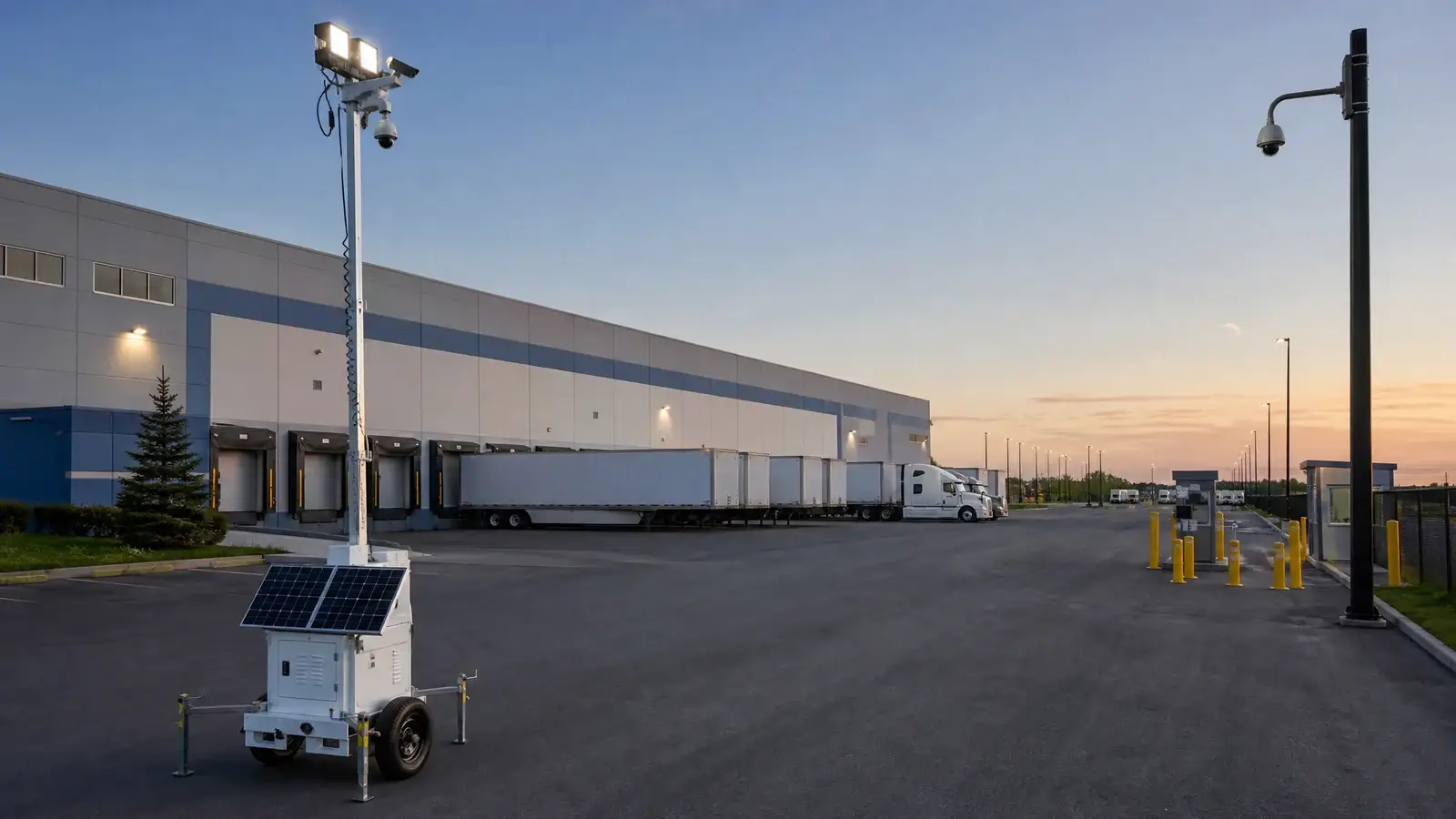
A facility may use fixed cameras around established areas, mobile solar security towers for temporary or remote portions of the property, access control around doors and restricted spaces, gate systems around vehicle entrances and analytics to help focus attention on configured activity.
The right combination depends on how the property operates. A warehouse with a small controlled yard may require a very different design from a distribution campus with dozens of loading positions, trailer parking and multiple vehicle approaches. Commercial video surveillance is usually the starting point, but it is rarely the whole answer.
Security planning should begin with those operating patterns instead of beginning with a product list.
Security challenges across warehouse and distribution properties
Warehouse and distribution properties rarely present a single security problem. Each operating area behaves differently, and the design should reflect how the property actually works rather than where cameras are easiest to mount.
Loading docks
Loading docks bring together employees, drivers, vehicles, inventory and repeated movement. Camera placement should account for the activity at the dock as well as the approaches leading into it. Dock activity also changes through the day, so a design built around a single shift may leave less useful coverage during overnight or weekend receiving.
Trailer yards
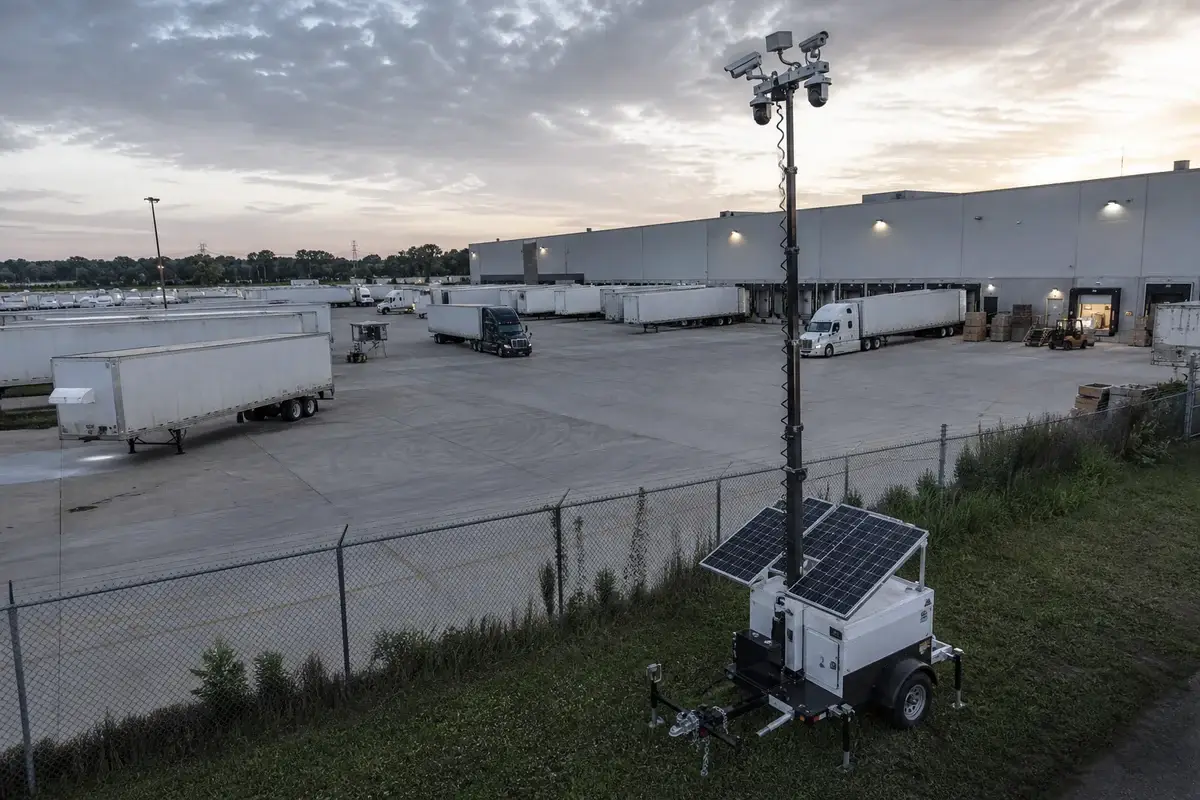
Trailer parking and staging areas can extend well beyond the building. A security design may require fixed cameras, mobile surveillance or a combination depending on yard size and available infrastructure. Yard coverage should also account for how trailers are positioned, because a row of parked equipment can obstruct a camera view that worked well when the yard was empty.
Vehicle entrances
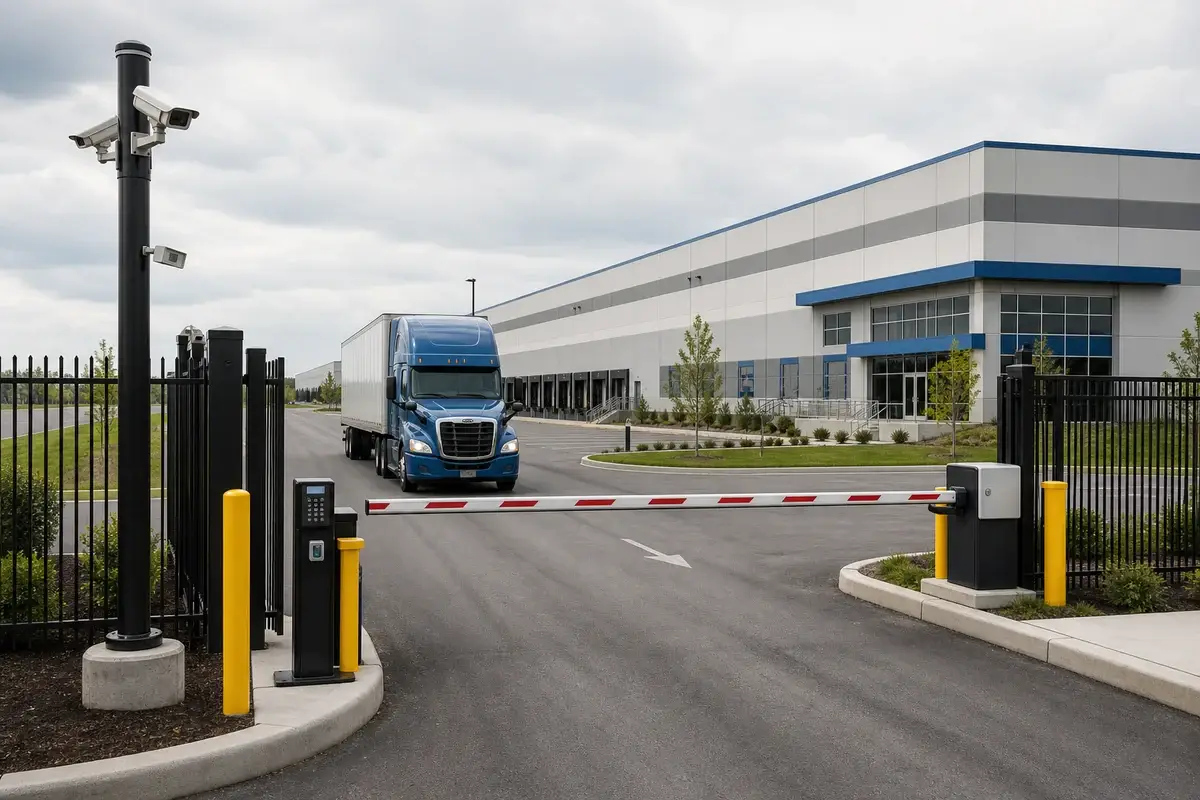
Commercial gate systems, access processes and surveillance can help provide clearer control and documentation around the primary vehicle approaches to the property. The entrance is also where most third-party traffic first reaches the site, which makes it a practical place to document arrivals and departures.
Employee and visitor access
Warehouse environments may need to distinguish employee entry from drivers, visitors, contractors or vendors. Access-control planning can help support those different workflows. Those groups often arrive at different doors and at different times of day, and the design should reflect that rather than treating every entrance the same way.
Remote exterior areas
Large commercial properties can contain equipment areas, overflow parking or remote corners that sit outside the most useful viewpoint of a building-mounted camera. Distance, lighting and the available network path usually determine whether those areas are better served by a permanent camera position or a mobile deployment.
Changing operations
Seasonal demand, temporary trailer storage, expansion or changes in traffic flow can create surveillance needs that were not part of the original facility design. Reviewing the design when the operation changes helps avoid a security system that reflects how the property worked several years earlier.
Mobile surveillance for trailer yards and remote operating areas
A mobile security tower can provide an elevated camera position closer to an exterior area that needs coverage. This can be useful for trailer yards, overflow parking, temporary staging zones or portions of a logistics property where permanent infrastructure does not extend to the preferred camera location.
Mobile platforms are also frequently described as surveillance trailers or security camera trailers. The terminology matters less than the actual configuration, camera position, connectivity and recording requirements.
For established warehouse areas with stable infrastructure, permanent surveillance may provide the better long-term solution. For changing or remote exterior zones, mobile surveillance can supplement the fixed system without forcing every temporary camera position into the permanent design. Connectivity is usually the deciding practical constraint, because a camera placed beyond the reach of the existing network still has to return video to wherever it will be recorded and reviewed.
The trade-offs are set out in more detail in a separate comparison of mobile solar security towers vs. fixed cameras.
Gate operators, access control and warehouse vehicle entry
For many distribution facilities, the vehicle entrance is a critical security and operating point.
Commercial gate operators can help automate the movement of an approved gate, but the operator itself is only one component of the entry strategy. Surveillance, access procedures, vehicle flow and the way drivers are authorized all affect how the entrance performs. That relationship is covered further in a guide to commercial gate operators for warehouse and distribution centers.
A facility may need cameras that document approaching vehicles, commercial access control or authorization procedures, a gate appropriate for the expected traffic pattern and a process for visitors or deliveries that do not follow the normal employee workflow.
The security system should support movement through the facility rather than create an unnecessary bottleneck.
Video analytics and thermal imaging for logistics environments
Warehouses and logistics yards can generate complex video scenes involving vehicles, trailers, loading activity, employees and changing exterior lighting.
Video analytics can help direct attention toward activity that meets configured rules in defined camera views. The quality of the result depends on camera placement, image quality, environment and configuration.
Thermal imaging may also be worth evaluating for certain low-light exterior areas where heat-based visualization supports the surveillance objective.
Neither technology should be added merely because it is available. The security requirement should determine whether conventional cameras, analytics, thermal imaging or another configuration is appropriate.
Remote viewing and recorded operational activity
Commercial security teams may need to review live or recorded video from loading docks, yards, gates and other areas of a logistics property.
Before designing the system, ACG clarifies:
- Which operating areas require coverage.
- Who needs access to live or recorded video.
- What level of image detail is required.
- Whether analytics or alerts are part of the workflow.
- How footage should be retained.
- What network and communications infrastructure is available.
Those decisions help determine the camera, recording and connectivity design rather than treating remote access as an isolated feature.
How ACG evaluates warehouse and logistics security
1. Map the operating areas
Identify loading docks, vehicle entrances, trailer storage, employee access, parking, interior operations and remote exterior zones.
2. Understand movement
Review how employees, visitors, delivery drivers, vendors and commercial vehicles move through the property.
3. Define visibility and access objectives
Determine where the facility needs surveillance, controlled entry, vehicle management or additional documentation.
4. Select and integrate the technology
Match fixed surveillance, mobile towers, access control, gate systems, analytics, thermal imaging and network infrastructure to the approved objectives.
5. Review as operations change
Update the security plan when expansion, seasonal activity, yard configuration or traffic patterns change significantly.
Mobile surveillance vs. permanent warehouse cameras
Large logistics properties may benefit from both mobile and permanent surveillance.
| Decision factor | Mobile surveillance | Permanent warehouse cameras |
|---|---|---|
| Coverage duration | Useful for temporary, changing or supplemental exterior coverage. | Better suited to stable long-term camera positions. |
| Infrastructure | Can help where permanent network or mounting infrastructure is limited. | Designed around established power, network and mounting locations. |
| Yard changes | Can potentially be repositioned when operating areas change. | Best where the surveillance position is expected to remain stable. |
| Building integration | Can supplement the broader facility system. | Can integrate deeply with long-term facility security infrastructure. |
| Best use | Temporary trailer zones, overflow areas and changing exterior operations. | Established docks, entrances, interior areas and stable perimeters. |
The strongest design may use permanent cameras for established portions of the facility and mobile surveillance where temporary or remote conditions make flexibility valuable.
Security should support warehouse operations, not work against them
Distribution properties are operating environments first. Employees, delivery drivers, fleet vehicles and vendors must move through them efficiently.
A security design that creates unnecessary congestion at a gate or produces camera views that do not answer real operational questions will not become more useful simply because the equipment is technically advanced.
ACG evaluates security around the way the facility works. That can include the relationship between gate activity and surveillance, access-controlled areas, yard coverage, structured cabling and the way authorized personnel review recorded activity.
A requirements-first approach helps keep security technology aligned with the operation instead of turning it into a collection of disconnected devices.
Why warehouses and distribution centers work with ACG Security Solutions
Warehouse security often spans the building, exterior yard, gates, network and operational workflows.
ACG works across commercial video surveillance, access control, mobile security towers, analytics, thermal imaging, structured cabling, gate systems and security consulting. The same team plans construction site security systems for facilities still being built.
That broader capability helps evaluate the entire property rather than treating the warehouse camera system, gate and yard surveillance as unrelated purchases.
- Commercial and enterprise security focus
- Warehouse, distribution and exterior-yard planning
- Mobile and permanent surveillance evaluation
- Access and vehicle-entry strategy
- Integration-minded security design
Warehouse and logistics security systems FAQs
A warehouse and logistics security system is a commercial security design used to improve visibility, control access and document activity across warehouses, distribution centers, loading docks, trailer yards, parking and vehicle-entry points.
Typical areas include loading docks, vehicle entrances, trailer yards, employee and visitor access, parking, interior operating areas and remote exterior portions of the property.
Yes. Mobile surveillance may be useful for remote, temporary or changing yard areas where a permanent camera location is not yet practical.
They can be. Commercial gate operators can form one part of a vehicle-entry system that may also include surveillance, access procedures and controlled traffic flow.
Yes. Access control may help manage employee, visitor, vendor or restricted-area entry depending on the facility’s operating requirements.
Video analytics may help focus attention on configured activity in defined camera views when placement, image quality and environmental conditions support the intended use.
Permanent surveillance is generally better for stable long-term camera positions with established power, networking and mounting infrastructure.
Contact ACG Security Solutions with information about the property layout, vehicle flow, operating areas and current security concerns so the team can evaluate appropriate options.
Plan the right security system for your warehouse or distribution property
Tell ACG how your facility operates, where visibility is limited and which loading, yard or access areas matter most. The team can help evaluate a commercial security system that supports both the property and the way the operation works.