VEHICLE ACCESS & COMMERCIAL GATE AUTOMATION
Commercial Gate Operators
Commercial gate operators automate the movement of vehicle-entry gates at warehouses, industrial properties, parking areas, commercial campuses and other controlled entrances. ACG Security Solutions helps organizations evaluate the operator, access-control workflow, surveillance coverage and site conditions that need to work together at a commercial vehicle entrance.
The gate operator is only one part of the system. Gate type, opening geometry, vehicle flow, credential method, safety devices, power, communications and the condition of the existing gate all affect the design. ACG approaches gate automation as part of a broader commercial access-control and video-surveillance environment rather than selecting an operator without first understanding the entrance.
What is a commercial gate operator?
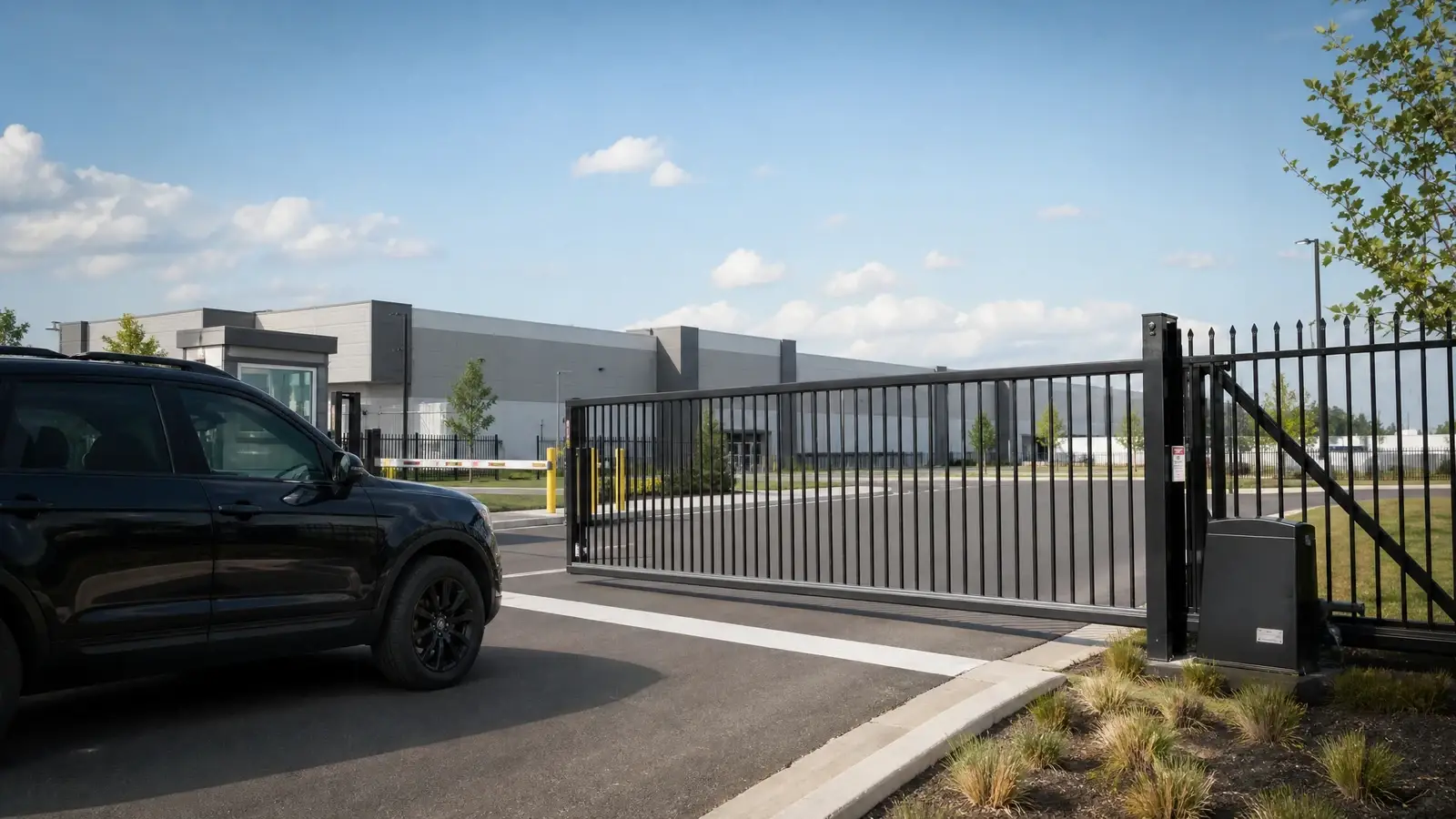
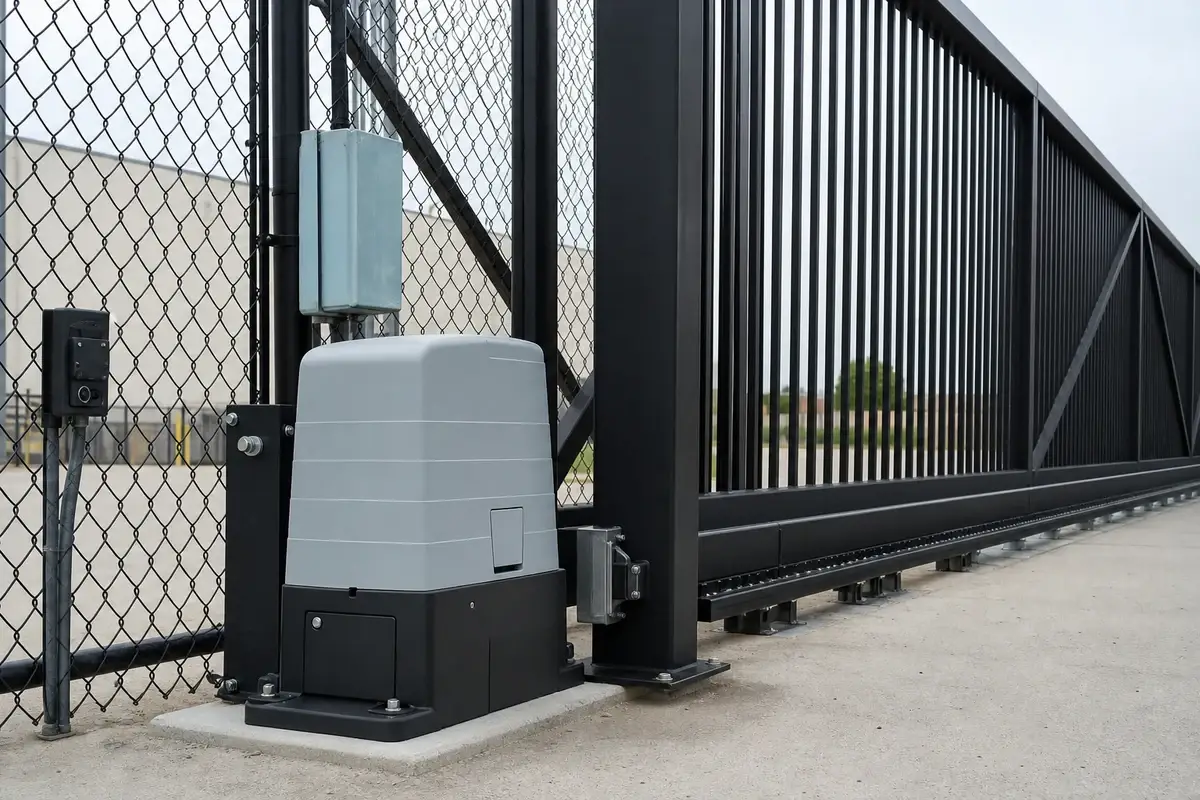
A commercial gate operator is the powered mechanism and control system used to move a compatible vehicle gate. Depending on the entrance, the gate may slide laterally, swing open, or use a barrier arm to control vehicle passage. The operator receives an authorized command and moves the gate according to the selected system and configured safety controls.
A gate operator should not be confused with the gate itself. The physical gate, hinges or rollers, posts, track or cantilever structure, operator, access-control device and safety equipment all contribute to how the entrance functions. If an existing gate is poorly aligned, damaged or not appropriate for automation, simply installing a new operator may not solve the underlying problem.
Gate configurations and operating environments
Sliding gates
Sliding gates move horizontally along or parallel to the fence line. They can be useful where the entrance has adequate side space and the site configuration supports a sliding path. The operator, gate structure, travel path and safety devices need to be evaluated together so the moving gate does not conflict with vehicles, pedestrians or adjacent site conditions.
Swing gates
Swing gates rotate inward or outward around hinges or pivot points. They require a clear swing area and a site layout that allows the gate leaf or leaves to move without obstructing traffic or creating avoidable conflicts. Vehicle approach, road grade, wind exposure, gate size and the condition of hinges or posts can affect whether a swing configuration is practical.
Barrier-arm entrances
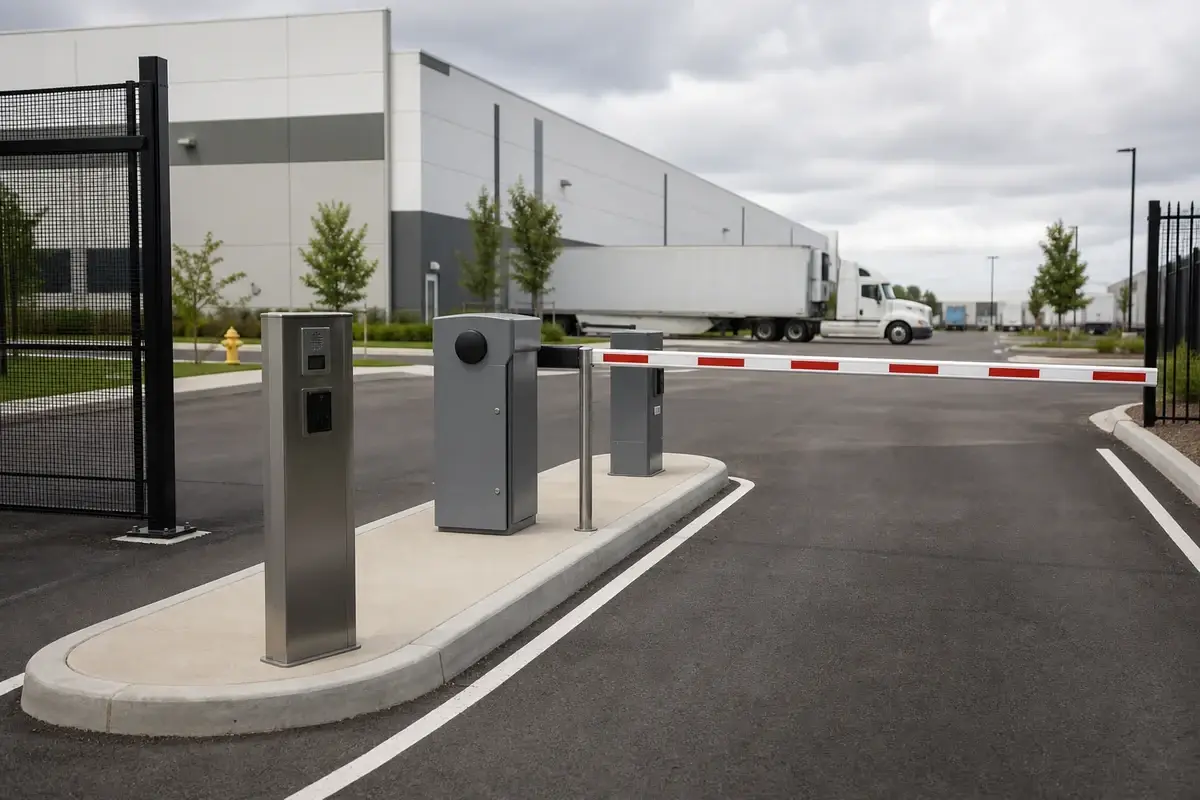
Barrier arms are commonly used where the primary requirement is vehicle traffic control rather than closing a full fence opening. Parking areas, employee entrances, garages and controlled vehicle lanes may use a barrier arm in combination with credentials, intercoms, vehicle detection or other approved devices. A barrier arm does not provide the same physical closure as a full slide or swing gate, so the security objective should determine whether it is appropriate.
Overhead or vertical gate applications
Some commercial entrances use overhead, vertical-lift or other specialized gate configurations where site geometry makes a conventional slide or swing gate less practical. These systems require application-specific evaluation of the gate, operator, structure, clearance and safety controls. ACG should verify the selected equipment and manufacturer-supported application before a design is finalized.
High-traffic commercial entrances
Distribution centers, industrial facilities, parking operations and other busy sites may process frequent vehicle movements throughout the day. The gate system should be evaluated around the type of traffic, peak periods, queue space, credential workflow and the expected operating pattern. High traffic is not simply a reason to choose the fastest operator; the entire entrance needs to move vehicles safely and predictably.
Restricted or after-hours vehicle access
Some facilities need a gate primarily to manage who enters after normal business hours or to separate public traffic from employee, vendor or service access. In those cases, the operator should be planned with the credential, intercom, visitor or remote-authorization workflow the organization intends to use. Access control and camera coverage can provide additional context around those decisions.
Entrance geometry and vehicle flow
The physical entrance determines what gate configurations can realistically work. ACG reviews the clear opening, available side or swing space, road alignment, grade, curb and fence conditions, vehicle approach and any nearby pedestrian or equipment paths before selecting an operator strategy.
Vehicle type also matters. A passenger-car entrance has a different turning radius and queue pattern from a truck court serving tractor-trailers. A gate that opens into the usable approach lane can create unnecessary congestion even when the operator itself functions correctly. Where trucks, delivery vehicles or mixed traffic are involved, the entrance should be evaluated around the largest and most operationally important vehicles expected to use it.
Operating and safety considerations
A powered gate is moving equipment.
Gate operators alongside access control and surveillance
A commercial gate operator becomes part of a security system when it is connected to a controlled authorization workflow. Access control can determine which approved credential, intercom action or other supported input is allowed to command the gate. The exact method depends on the system selected for the site.
Video surveillance can provide visual context around vehicle activity at the entrance. A camera may cover the approach lane, credential area, gate movement zone or broader vehicle entrance according to the surveillance objective. Cameras should be positioned for useful views rather than mounted wherever there happens to be a convenient pole.
What ACG needs before specifying a gate operator
Before recommending an operator or retrofit, ACG needs to understand both the physical gate and the way the entrance is used.
- Existing gate type and condition. Is the entrance using a slide, swing, barrier or other gate, and is the physical gate suitable for continued automated operation?
- Opening geometry and travel path. What clear opening, side space, swing area, grade and surrounding site conditions affect movement?
- Vehicle type and traffic pattern. Will the entrance serve passenger vehicles, delivery vans, tractor-trailers, mixed traffic or a specialized fleet?
- Authorization workflow. Will users enter with credentials, an intercom, a staffed process, remote approval or another supported access method?
- Power and communications. What electrical service, network connection, control wiring or other infrastructure is available at the entrance?
- Safety and site constraints. Where do pedestrians, vehicles, fencing, curbs, equipment and other site features intersect with the proposed gate travel path?
These details determine whether the right answer is a new operator, a gate-and-operator modification, a different gate configuration or a broader entrance redesign.
How ACG scopes a commercial gate system
1. Define the vehicle-access objective
ACG begins by identifying who needs to enter, how authorization should occur, what type of traffic uses the entrance and what operating problem the organization is trying to solve. The goal may be employee access, delivery control, after-hours restriction or another defined commercial workflow.
2. Inspect the gate and entrance geometry
The existing gate, posts, hinges or rollers, opening width, travel path, grade and surrounding conditions are reviewed. If the physical gate is not appropriate for the intended automation, that needs to be identified before an operator is selected.
3. Select the operator and control approach
ACG evaluates a compatible operator strategy based on the gate configuration, traffic requirements and approved application. The access-control method, vehicle detection, safety controls and communications requirements are also defined at this stage.
4. Integrate and test the entrance workflow
After installation, the gate movement, authorization method, safety devices and relevant surveillance views should be tested together. The goal is to verify the intended sequence from vehicle approach through authorized entry and gate closure.
5. Document and review ongoing operation
The finished project should document the primary equipment and operating workflow so facility staff understand how the entrance is intended to function. If traffic patterns, credentials, gate hardware or surrounding site conditions change later, the system should be reviewed before those changes create operating problems.
Sliding vs. swinging vs. barrier-arm systems
The table is a planning comparison, not a product-selection rule. Gate size, construction, traffic, environment and selected operator specifications must still be evaluated for the individual site.
| Factor | Sliding gate | Swing gate | Barrier-arm entrance |
|---|---|---|---|
| Gate movement | Moves laterally along the fence or support line | Rotates through a defined swing area | Raises and lowers an arm across the vehicle lane |
| Space requirement | Requires suitable lateral travel or cantilever space | Requires a clear arc for the gate leaf or leaves | Uses relatively little horizontal gate-travel space |
| Physical closure | Can close a full fence opening | Can close a full fence opening | Primarily controls vehicle passage rather than closing a full fence line |
| Typical commercial fit | Industrial, warehouse and secured vehicle entrances where side space is available | Commercial entrances with adequate swing clearance and suitable approach geometry | Parking, employee or traffic-control lanes where a full gate is not required |
| Main planning question | Is there safe, unobstructed travel space along the gate path? | Is there enough clear swing area without conflicting with vehicles or grade? | Does the security objective require traffic control or a full physical gate closure? |
Retrofitting or replacing an existing operator
An older gate operator does not automatically mean the entire entrance must be rebuilt. ACG can review the existing gate, operator, controls, safety devices, power and access-control workflow to determine what remains useful and what no longer fits the site.
The physical condition of the gate is critical. Replacing the operator on a gate that binds, sags, drags, has damaged hardware or moves inconsistently can transfer the problem to the new equipment. The gate should move properly as a mechanical system before the automation strategy is finalized.
Why organizations work with ACG on gate projects
ACG Security Solutions treats commercial gate automation as a vehicle-access project that connects physical gate movement with access control, surveillance and site operations. That broader view is useful for warehouses, industrial properties, parking environments and enterprise facilities where the gate is one part of a larger security system.
ACG is based in Roswell, Georgia, and supports organizations across Georgia, the Southeast and qualifying projects nationwide. The project approach starts with the entrance, the vehicle workflow and the existing security environment before moving to operator selection.
- Commercial vehicle-entry planning based on real traffic and site geometry
- Evaluation of slide, swing, barrier and supported specialized gate applications
- Coordination with access control and video surveillance where appropriate
- Retrofit assessment before unnecessary replacement
- Support from entrance review through installation, testing and ongoing system changes
Commercial gate-operator FAQs
A commercial gate operator is the powered mechanism and control system used to move a compatible vehicle gate. It can be configured for slide, swing, barrier or other supported commercial gate applications depending on the physical entrance and selected equipment.
The gate is the physical moving barrier. The gate operator is the powered equipment that moves and controls that gate. Posts, hinges or rollers, access-control devices, safety equipment, power and the surrounding entrance conditions also affect how the complete system works.
Commercial applications commonly include slide-gate, swing-gate and barrier-arm operators, along with specialized configurations for certain entrances. The correct option depends on gate construction, available space, vehicle flow, site conditions and the manufacturer-supported application.
Yes, compatible gate operators can be connected to access-control, intercom or other supported authorization systems so approved users or workflows can command the entrance. The exact integration depends on the operator and access platform selected for the project.
Video surveillance can provide useful visual context around vehicle approach, credential use and gate activity. Whether cameras are needed, and where they should be placed, depends on the security objective and the views required at the specific entrance.
Sometimes. The gate’s construction, condition, movement, posts, rollers or hinges, electrical service and surrounding geometry should be evaluated first. If the gate is not mechanically suitable for automated operation, installing a new operator alone may not be appropriate.
Vehicle type, turning radius, queue space, peak traffic, approach direction and the location of credential or visitor controls all affect how an entrance should operate. ACG reviews those conditions before recommending a gate-operator strategy.
Contact ACG Security Solutions with the property type, gate configuration, vehicle types, current access method and any problems with the existing entrance. Photos, site plans or equipment information can help ACG determine what should be reviewed during the assessment.
Plan controlled vehicle entry for your property
A successful commercial gate project starts with the entrance, not the operator catalogue. The gate must fit the site, vehicles must be able to approach and clear the opening, authorized users need a practical access workflow, and the safety and surveillance systems must support the way the entrance is actually used.
ACG Security Solutions can help evaluate an existing commercial gate or plan a new automated vehicle entrance that coordinates gate movement with access control, surveillance and the broader security environment.